
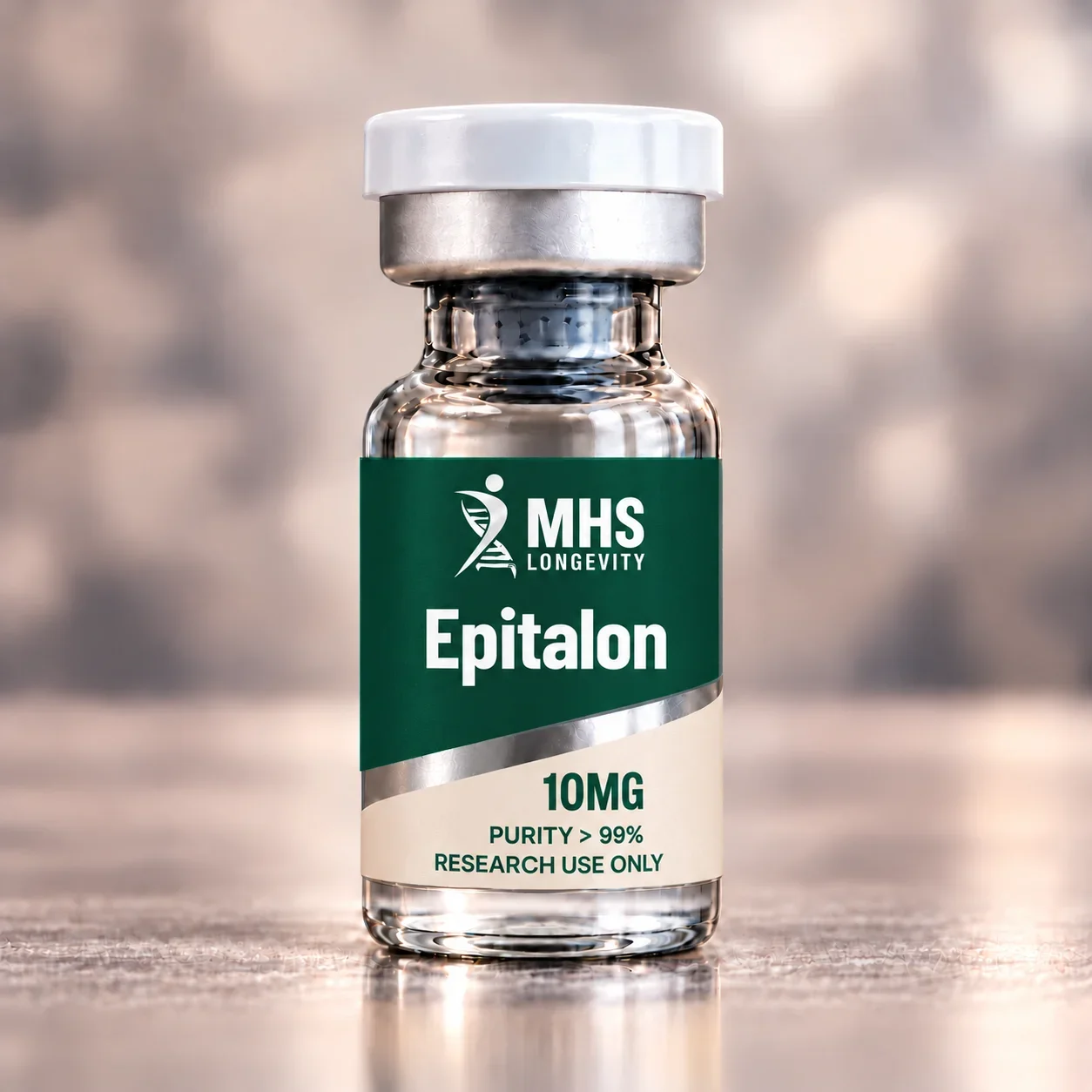
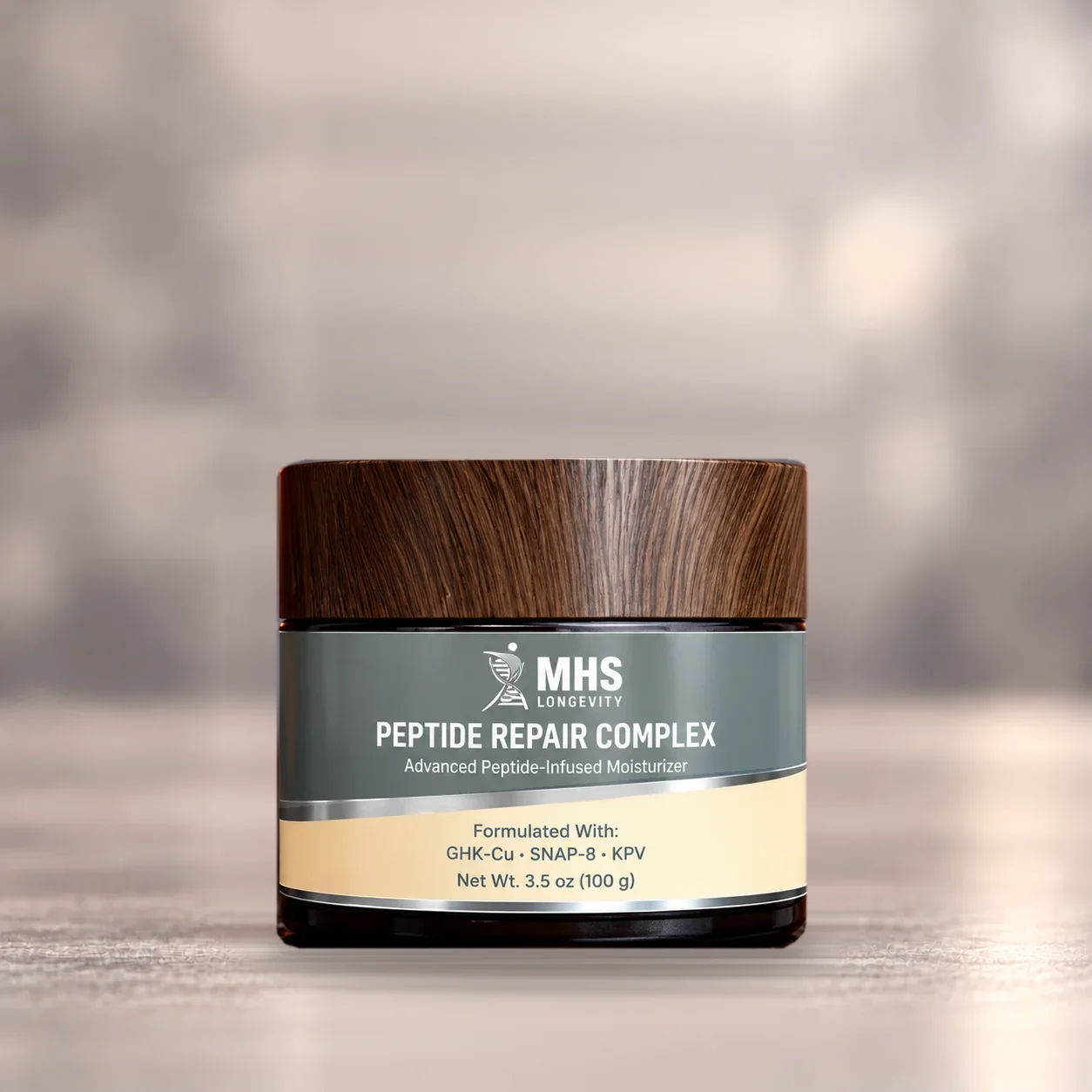
Peptide Repair Complex
- 99%+ purity verified by independent HPLC + Mass Spec
- Certificate of Analysis published — match it to your vial
- Ships from US facility · Free shipping over $150
$199.99
In stock — ships within 24h
For laboratory research use only. Not for human consumption.
Storage & handling+
Lyophilized Peptide Repair Complex should be stored at -20°C or below for extended stability. Once reconstituted in bacteriostatic water, the solution is typically held at 2–8°C and used within the documented stability window. Multi-peptide formulations have a stability window dictated by the least-stable component, which is one reason single-use aliquoting after reconstitution helps preserve formulated ratio across a study timeline. Repeated freeze–thaw cycles should be avoided. Standard aseptic technique applies during reconstitution. For laboratory research use only.
Shipping & delivery+
Orders placed before 2pm ET ship the same business day from our US facility. Standard (2–4 days) or expedited options available. Free standard US shipping on orders over $150. Plain, unbranded packaging. Full shipping policy
Returns & damage policy+
Damaged or non-conforming orders are reshipped at no cost — contact support with a photo within 7 days of delivery. See our full returns policy for details. Full returns policy
We accept


HPLC tested
99%+ purity verified
Public COAs
Third-party certificates
Veteran-owned
US-based fulfillment
Free shipping
On orders over $150
Overview
Peptide Repair Complex
Peptide Repair Complex is an advanced peptide-infused moisturizer designed to support skin recovery, hydration, and visible firmness. Formulated with targeted bioactive peptides, this cream helps improve skin texture and promote a smoother, more revitalized appearance. This formula is especially suited for dry, sensitive, or compromised skin types, including skin that is prone to irritation or eczema-like dryness. It focuses on barrier support, moisture retention, and overall skin conditioning.
Scientific Overview
This formulation features GHK-Cu, SNAP-8, and KPV—peptides studied for their roles in skin
conditioning and cosmetic rejuvenation research. GHK-Cu has been explored for its association
with collagen-related pathways and skin renewal processes. SNAP-8 is commonly studied for its
cosmetic smoothing properties, while KPV has been examined in research for its role in supporting
skin comfort and visible redness reduction in cosmetic settings. These ingredients are incorporated
to support improved skin resilience, hydration balance, and overall appearance within a topical
cosmetic formulation.
Product Details
• Product Name: Peptide Repair Complex
• Formulated With: GHK-Cu, SNAP-8, KPV
• Use: External application only
Legal Disclaimer
This product is intended for cosmetic use only. It is not intended to diagnose, treat, cure, or prevent any disease, including eczema. For external use only. Avoid contact with eyes. Discontinue use if irritation occurs.
Frequently asked questions
Yes. Every batch of Peptide Repair Complex undergoes independent third-party testing using High-Performance Liquid Chromatography (HPLC) and Mass Spectrometry (MS). The Certificate of Analysis is published and accessible from the product page.
Peptide Repair Complex sold by MHS Longevity is verified to 99%+ purity, with the result documented in each batch's Certificate of Analysis. Anything below that threshold is rejected before release.
The Certificate of Analysis for Peptide Repair Complex is available directly from the product page and on our Third-Party Test Results page. Each COA includes the batch identifier, test date, testing method, and verified purity percentage.
Peptide Repair Complex ships from our US-based facility with standard or expedited options. Orders over $150 qualify for free standard US shipping. All orders are packaged discreetly with documented handling protocols.
No. Peptide Repair Complex is supplied strictly for laboratory research purposes only. It is not approved by the FDA for human or veterinary use, and it is not intended to diagnose, treat, cure, or prevent any disease.
MHS Longevity is a veteran-owned operation focused on pharmaceutical-grade research compounds. We source from vetted manufacturers, batch-test independently with HPLC and Mass Spectrometry, and publish every Certificate of Analysis. Pricing is transparent and the testing process is documented end-to-end.
The specific component composition and per-component ratios are documented per-batch on the Certificate of Analysis rather than restated here. The COA is the authoritative source for the formulation as supplied; this matches our practice across all blend products.
When the research design specifically calls for combined administration with a pre-validated ratio, the blend formulation removes per-experiment ratio-mixing variability and reduces handling steps. When the design needs flexible per-component dosing — for example a dose-response curve on one component — single-molecule vials of each individual peptide are typically more appropriate.
The independent laboratory integrates each component's HPLC peak area and compares the inter-component ratios against the formulation specification. Each batch must meet both per-component purity (99%+) and inter-component ratio criteria for release.
Peptide Repair Complex is sent to an independent third-party laboratory for HPLC and Mass Spectrometry analysis before each batch is released. The lab's identifier, test date, per-component identification and purity, and component-ratio verification are published on the Certificate of Analysis for that batch.
You may also like
Research & buying
The evidence behind Peptide Repair Complex and the questions to ask any vendor before you order.
Research details — Peptide Repair Complex
Peptide Repair Complex is a proprietary multi-component research formulation positioned in the tissue-repair pharmacology space. As with all blend products, the value proposition rests on combining components with complementary research-pathway profiles into one pre-validated formulation — and the verification work rests on confirming each component's identity, purity, and the ratio between them. This guide explains how Peptide Repair Complex is positioned in research-protocol terms, the analytical-verification approach that applies to its multi-component nature, and how to read its Certificate of Analysis.
What is Peptide Repair Complex?
Peptide Repair Complex is a multi-peptide blend formulated for research on tissue-repair pathways. The specific component composition and per-component ratios are documented on each batch's Certificate of Analysis — this is the authoritative source for the blend as supplied, and matches our standard practice for blend products. The formulation is supplied as a lyophilized solid for laboratory reconstitution. Researchers using Peptide Repair Complex should reference the batch-specific COA for the component breakdown.
Peptide Repair Complex is sold strictly for laboratory and research use. It is not approved by the FDA or any other regulatory body for human or veterinary use, and nothing in this guide constitutes guidance for human administration.
Research-pathway logic for tissue-repair blends
Tissue-repair research has historically used several individual peptide compounds — BPC-157 (gastric protective protein fragment), TB-500 (thymosin β4 fragment), GHK-Cu (copper-binding tripeptide), KPV (α-MSH C-terminal fragment), among others — that engage different proposed mechanisms but converge on related biological endpoints. The conceptual case for combining components into a single formulation rests on whether the mechanisms are genuinely complementary in the protocol of interest, and whether the formulated ratio matches the dose-response profile the researcher needs. Single-mechanism research designs are usually better served by single-molecule products; multi-pathway exploratory designs may benefit from a pre-validated combination.
How Peptide Repair Complex quality is verified
Every batch of MHS Longevity Peptide Repair Complex is submitted to an independent third-party laboratory before release. Blend verification applies the same multi-step process as for any combination formulation:
- HPLC separates the formulation into individual component peaks. Each component is identified by retention time against known reference material, and each component's purity within its own peak must meet the 99%+ specification.
- Mass Spectrometry independently confirms the identity of each component peak. MS distinguishes components that may have similar retention times but different masses — a verification step that pure HPLC cannot always provide on its own for closely-eluting peptides.
- Component ratio verification measures the ratio between components against the formulation specification. This is the blend-specific release criterion.
What a Peptide Repair Complex Certificate of Analysis shows
- Product name and composition. Peptide Repair Complex, with the per-batch component list documented.
- Batch identifier. Unique ID linking certificate to vial.
- Test date. When the analysis was performed.
- Method. HPLC + MS with per-component identification.
- Per-component purity. Each component at 99%+ within its own peak area.
- Component ratio. Measured ratio meeting the formulation specification.
- Lab and signatures. The independent lab performing the analysis.
Storage and handling (research lab context)
Lyophilized Peptide Repair Complex should be stored at -20°C or below for extended stability. Once reconstituted in bacteriostatic water, the solution is typically held at 2–8°C and used within the documented stability window. Multi-peptide formulations have a stability window dictated by the least-stable component, which is one reason single-use aliquoting after reconstitution helps preserve formulated ratio across a study timeline. Repeated freeze–thaw cycles should be avoided. Standard aseptic technique applies during reconstitution.
Where to buy Peptide Repair Complex
The same eight questions apply whether you're buying Peptide Repair Complex from us or anywhere else. Vendors who can't answer any of them are worth a closer look.
Vendor evaluation checklist
1. Is the Certificate of Analysis public and downloadable?
A vendor unwilling to publish HPLC/MS results for the batch you're buying has nothing to verify their purity claim against.
2. Which testing method was used — HPLC, Mass Spectrometry, or both?
HPLC measures purity. Mass Spectrometry confirms the molecule's identity. Reputable batches go through both.
3. What's the verified purity percentage on the published COA?
Industry research standard is 99%+. Below that, you're paying for a compound diluted with synthesis byproducts.
4. Where does the product ship from?
US-based fulfillment generally means shorter handling times, customs-free delivery, and clearer return remedies.
5. Is the price published at a single list rate, or hidden behind tier locks?
Opaque pricing is a yellow flag. Transparent vendors quote the same number to every customer.
6. What's the free-shipping threshold, if any?
Compare the all-in cost (product + shipping + handling) — not just the headline price.
7. How is the product stored prior to shipment?
Lyophilized peptides degrade with temperature swings. Vendors should disclose temperature-controlled storage.
8. Is there a documented damage-claim and return policy?
Discreet shipping carries handling risk. A clear, written policy protects you when something goes wrong.
MHS LongevityThis site - Price
- $199.99
- Purity
- 99%+
- Testing
- HPLC + MS
- COA public
- US-based
- Free shipping
- $150+
- Last checked
- Oct 10, 2026
| Vendor | Price | Listed purity | Testing method | COA public | US-based | Free shipping | Last checked |
|---|---|---|---|---|---|---|---|
MHS LongevityThis site | $199.99 | 99%+ | HPLC + MS | $150+ | Oct 10, 2026 |
Competitor data sourced from each vendor's public product page on the date shown. Listed purity reflects each vendor's own published claim; Certificate of Analysis availability is verified at the URL above. Data may have changed since last check.