
The Science of Optimization
Understanding Peptides
Learn how short-chain amino acid sequences act as signaling molecules — regulating recovery, metabolism, and cellular repair throughout the body.
Explore Programs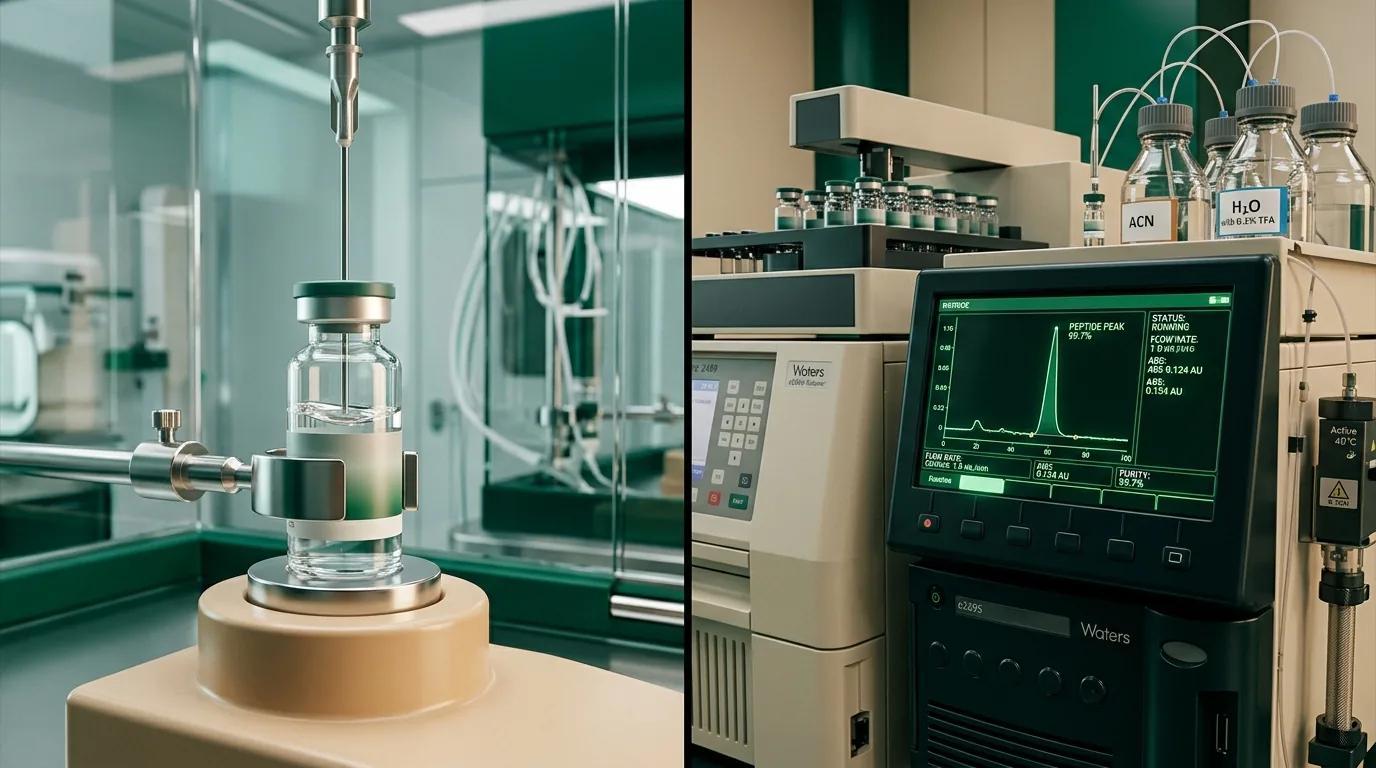
The Basics
What Are Peptides?
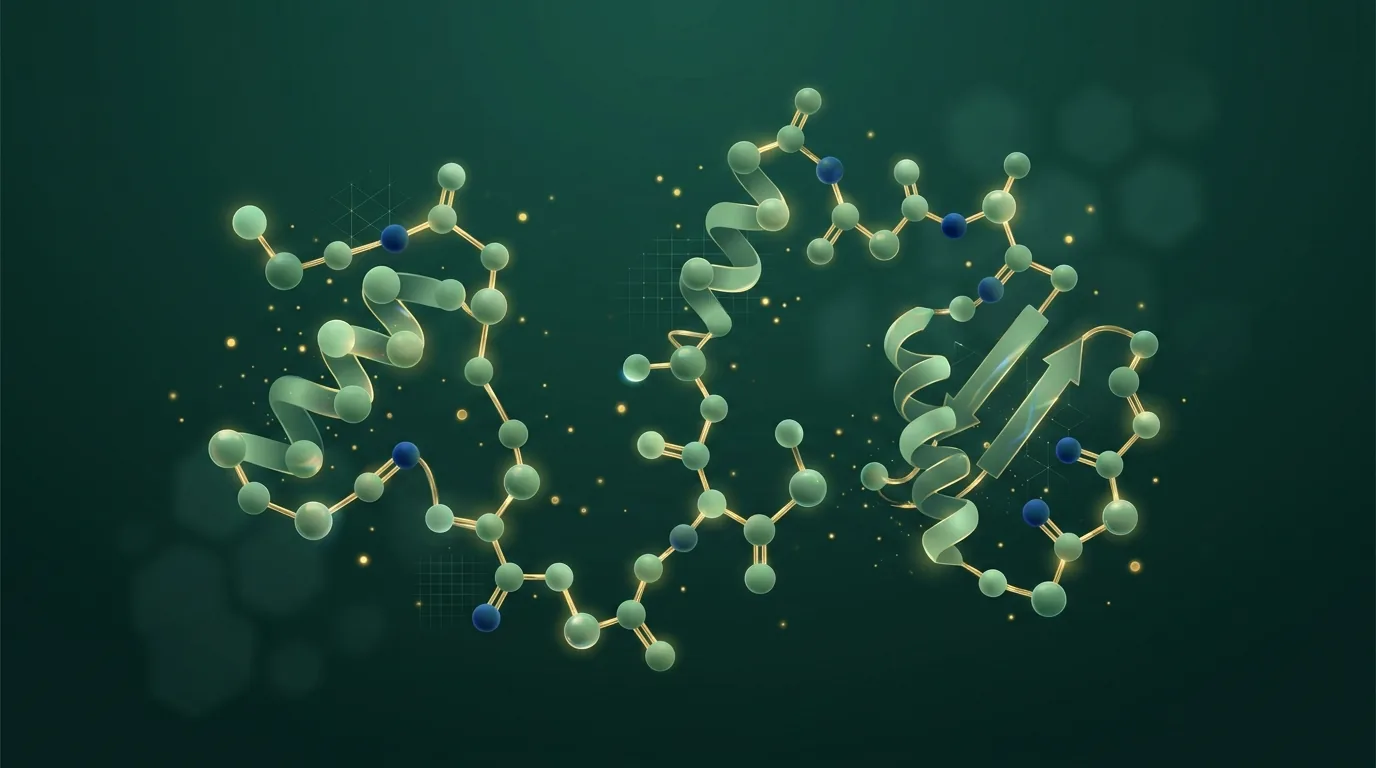
Peptides are short chains of amino acids — typically between 2 and 50 — that act as signaling molecules in the body. Unlike larger proteins, their compact size allows them to bind to specific cell receptors and trigger targeted biological responses.
They play key roles in regulating recovery, metabolism, cellular repair, immune function, and cognitive performance. Each peptide sequence targets a distinct physiological pathway.
As we age, the body's natural peptide production declines — affecting energy levels, tissue repair, body composition, inflammation response, and overall cellular function. Research peptides are designed to support these specific pathways.
The Mechanism
How Peptides Work
Signal
Peptides bind to specific cell-surface receptors, initiating a precise signaling cascade.
Activate
Targeted biological pathways are triggered — from gene expression to enzyme activation.
Respond
The body initiates repair, growth, regulation, or metabolic shifts in response to the signal.
Research Areas
Explore Optimization Programs
Each program groups research peptides by health goal with structured, tiered protocols — from beginner to advanced.

Weight Loss
Metabolic optimization & fat metabolism

Muscle Growth
GH secretagogues & IGF-1 pathways

Longevity
Cellular aging & telomere research

Brain Health
Neuroprotection & cognitive function

Skin & Hair
Dermatological & regenerative research

Sexual Health
Reproductive endocrinology research

Immune Health
Immunomodulation & cellular defense

Gut Health
Gut barrier & anti-inflammatory research
Research & Insights
From the Lab

What "Research-Grade" Means in the Peptide Market
How the term is used in the industry, and what documentation and standards you should expect.
Read More ➝
Third-Party Lab Testing and Quality Assurance
How independent verification works and why it matters for purity, concentration, and batch consistency.
Read More ➝
Storage and Handling Considerations for Research Peptides
Temperature stability, light protection, and handling procedures to maintain compound integrity.
Read More ➝Common Questions
Frequently Asked Questions
Research peptides are short-chain amino acid sequences synthesized for scientific investigation. They are designed to interact with specific cell receptors and biological pathways, allowing researchers to study targeted physiological responses such as tissue repair, metabolic regulation, and immune modulation.
Every batch undergoes independent third-party laboratory analysis using High-Performance Liquid Chromatography (HPLC) and Mass Spectrometry (MS). These tests verify purity, identity, and concentration. Results are documented in a Certificate of Analysis (CoA) available for each product.
Purity percentage reflects the proportion of the target compound in a sample, as measured by HPLC analysis. A 99%+ purity rating means less than 1% of the sample consists of impurities, degradation products, or synthesis byproducts — meeting pharmaceutical-grade research standards.
Lyophilized (freeze-dried) peptides should be stored at -20°C or below for long-term stability. Reconstituted peptides should be refrigerated at 2–8°C and used within the timeframe specified for that compound. Protect all peptides from light, moisture, and repeated freeze-thaw cycles.
Protocol tiers are structured research frameworks that organize peptides by complexity and experience level. Beginner tiers use single compounds, Intermediate tiers combine synergistic peptides, and Advanced tiers employ comprehensive multi-pathway approaches. Each tier builds on the previous one.
Research peptides are not FDA-approved drugs or supplements. They are intended strictly for laboratory and scientific research purposes. MHS Longevity products are not intended for human consumption, and all statements on this site have not been evaluated by the FDA.
Ready to Begin?
Explore structured research programs or browse our full catalog of verified compounds.