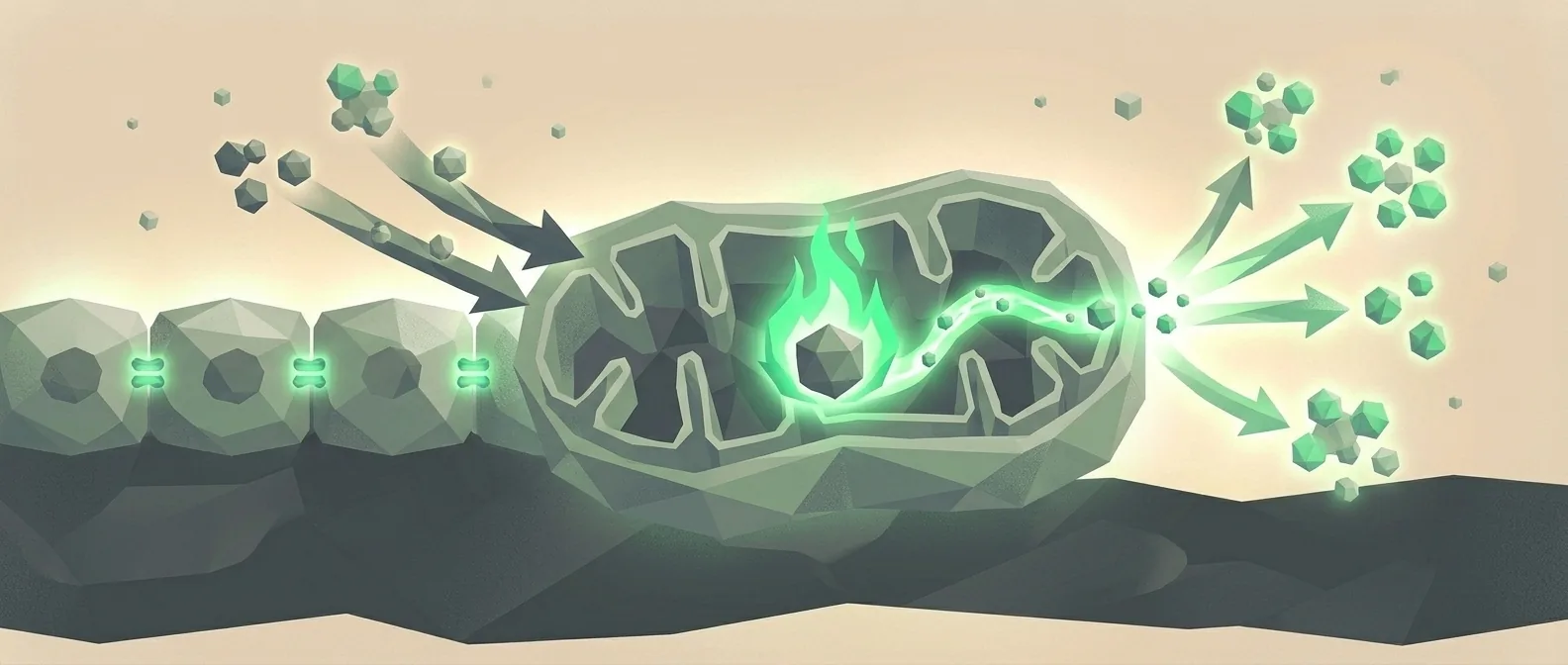

Body composition — the ratio of fat mass to lean mass (muscle, bone, organ tissue, water) — is a more nuanced metric than body weight alone. Two individuals at the same weight can have vastly different compositions, with different implications for metabolic health, physical performance, and disease risk in research contexts.
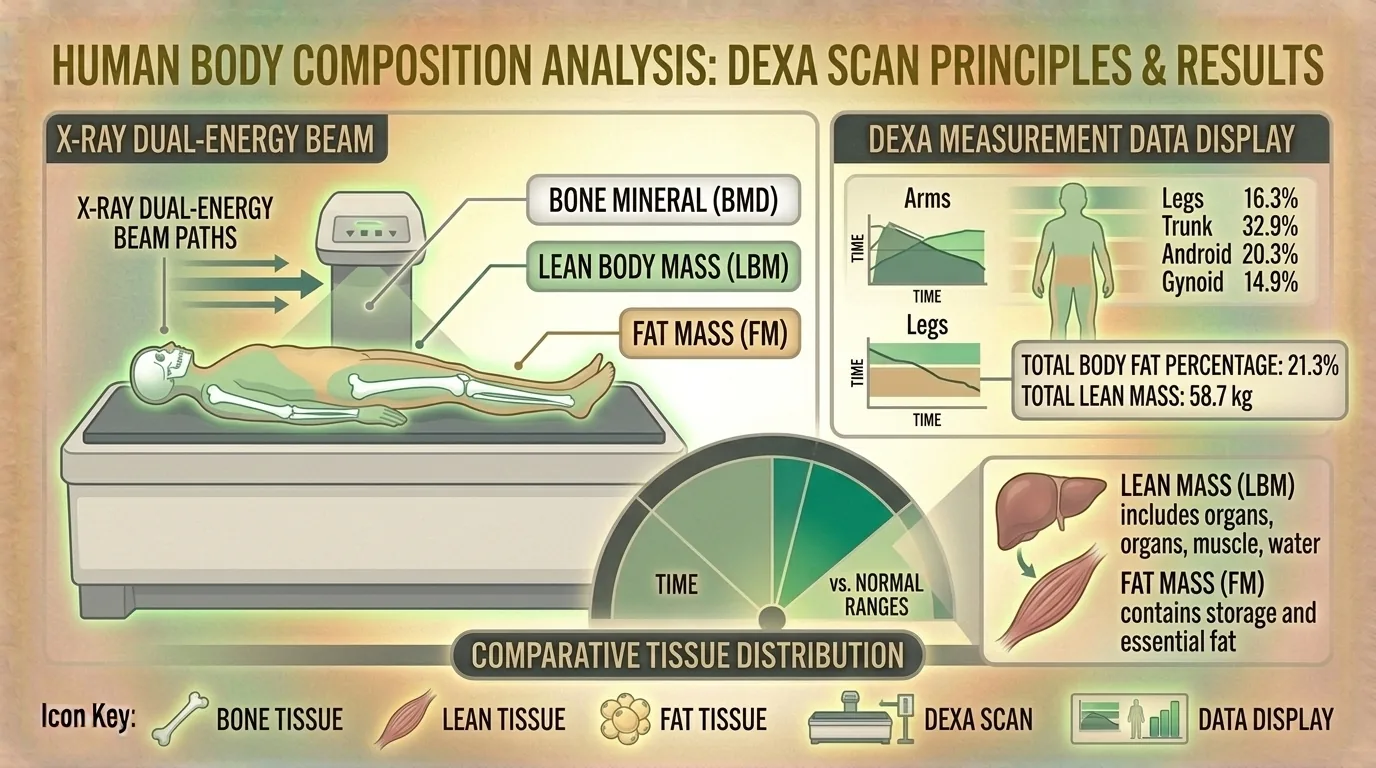
Measurement Methods
| Method | Accuracy | Accessibility |
|---|---|---|
| DEXA scan | High — gold standard | Clinical/research settings |
| BIA (Bioelectrical Impedance) | Moderate — affected by hydration | Consumer devices available |
| Hydrostatic weighing | High | Specialized facilities only |
| Skinfold calipers | Moderate — operator dependent | Widely available |
Research Compounds for Body Composition
Several categories of research compounds are being studied for their effects on body composition parameters:
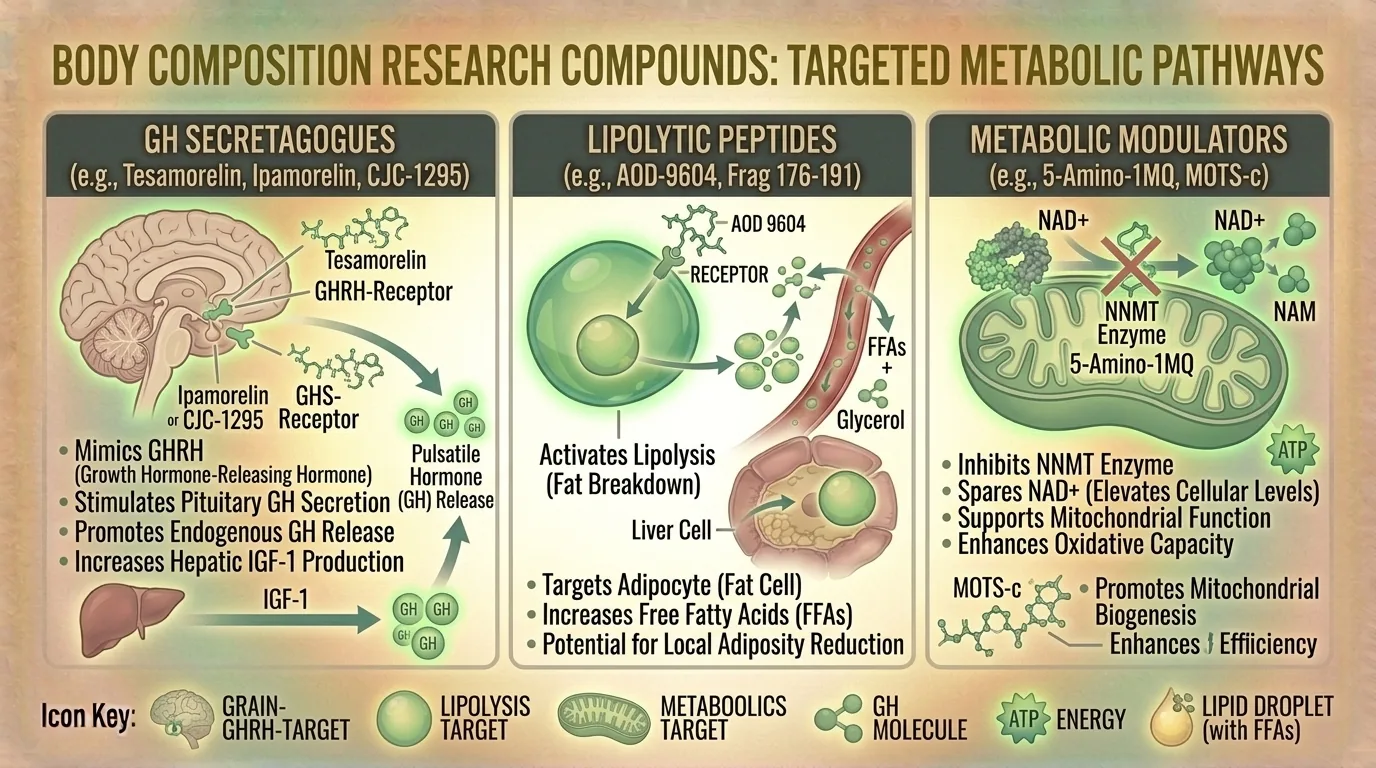
Compounds like Ipamorelin and CJC-1295 stimulate endogenous growth hormone release, which research associates with increased lean mass and reduced fat mass. These compounds work by activating the GHRH receptor or GH secretagogue receptor (ghrelin receptor), promoting pulsatile GH release that mimics natural secretion patterns.
AOD 9604 targets fat metabolism specifically through the GH fragment pathway. Research suggests it promotes lipolysis without the broader metabolic effects of full-length growth hormone, making it a more targeted tool for studying fat metabolism in isolation.
Compounds like 5-Amino 1MQ and NAD+ target metabolic efficiency at the cellular level. By supporting mitochondrial function and NAD+ availability, these compounds are studied for their potential effects on basal metabolic rate and energy expenditure.
Key Takeaways
- Body composition (fat vs. lean mass ratio) is a more informative metric than body weight alone
- DEXA scanning is the gold standard for body composition assessment in research
- Growth hormone secretagogues, lipolytic peptides, and metabolic modulators each target different pathways
- Compound selection depends on specific research objectives — fat loss, lean mass, or metabolic efficiency
- Body composition research requires controlled study designs and validated measurement methods
Research-Grade Compounds
Explore verified peptides for body composition and metabolic research.
Shop Peptides