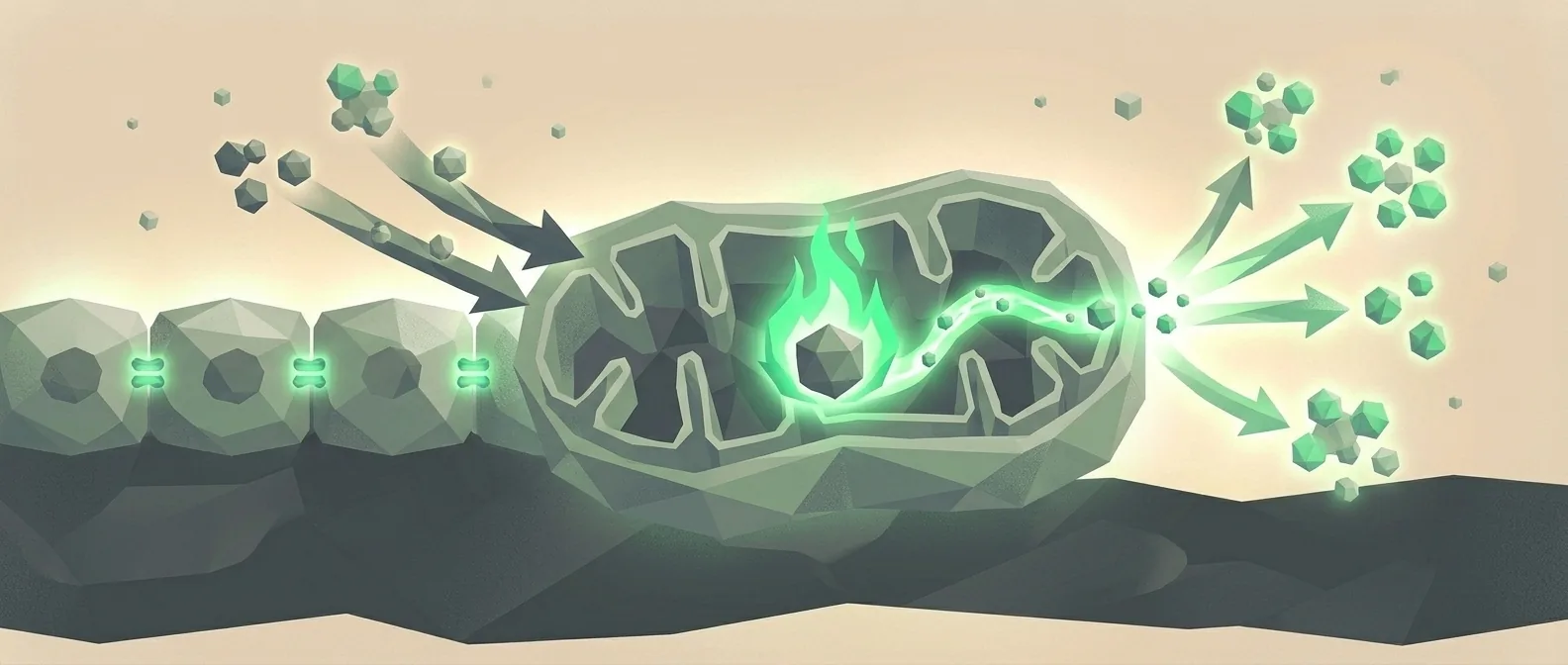
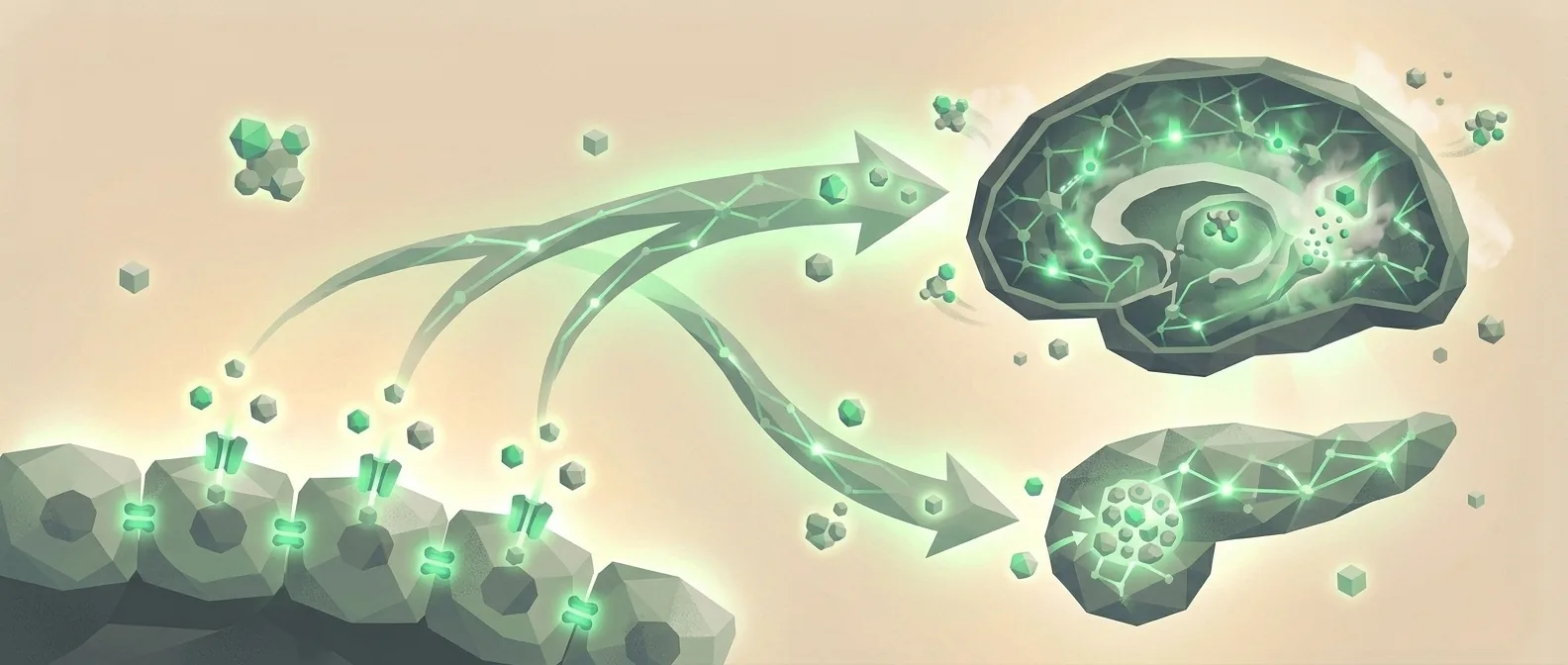
Glucagon-like peptide-1 (GLP-1) is an incretin hormone produced by intestinal L-cells in response to food intake. It plays a central role in glucose homeostasis, appetite regulation, and gastric motility — making the GLP-1 receptor a major target in metabolic research.
This article explains GLP-1 biology, how receptor agonists work, and why this pathway has become one of the most actively studied areas in metabolic science.
Natural GLP-1 Signaling
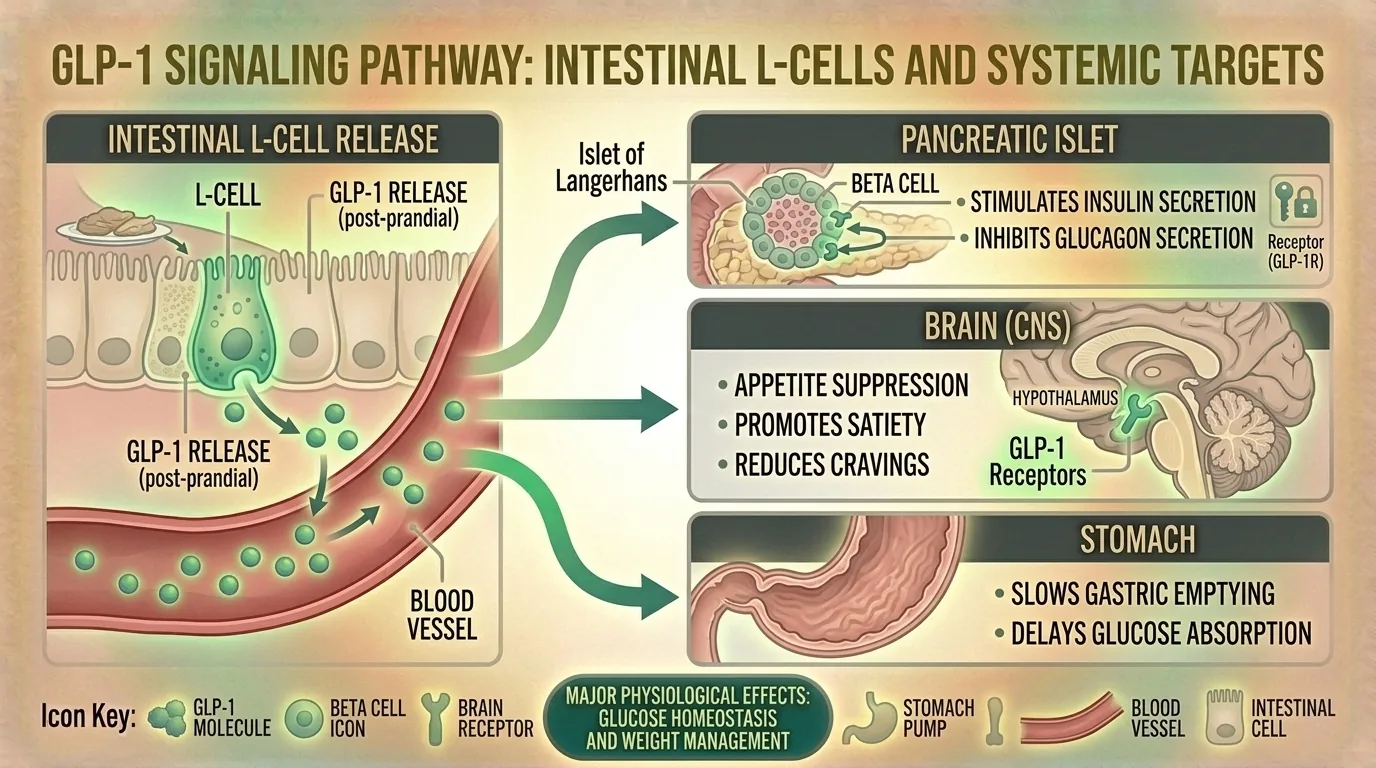
When food enters the small intestine, L-cells release GLP-1 into the bloodstream. This hormone acts on multiple organ systems simultaneously:
- Pancreas — Stimulates glucose-dependent insulin secretion and suppresses glucagon release
- Brain — Activates satiety centers in the hypothalamus, reducing appetite
- Stomach — Slows gastric emptying, prolonging the feeling of fullness
- Liver — Reduces hepatic glucose output
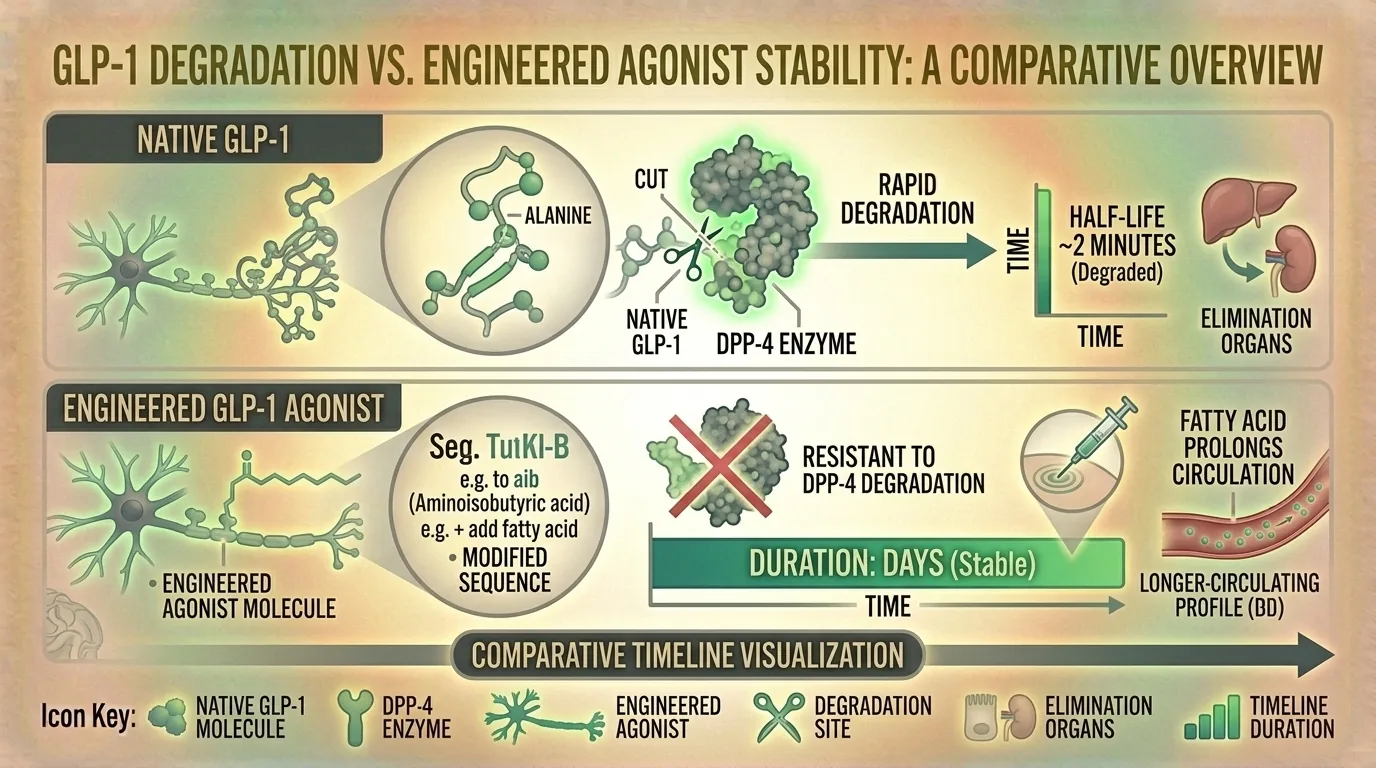
Native GLP-1 has a very short half-life (approximately 2 minutes) because the enzyme DPP-4 rapidly degrades it. This short duration limits the utility of the natural hormone as a research tool.
How GLP-1 Receptor Agonists Work
GLP-1 receptor agonists are synthetic analogs designed to resist DPP-4 degradation, extending their duration of action from minutes to days or weeks. By activating the same receptor as natural GLP-1 — but for longer periods — these compounds produce sustained effects on insulin secretion, appetite suppression, and gastric motility.
Research Applications
| Research Area | GLP-1 Pathway Relevance | Evidence Level |
|---|---|---|
| Glucose regulation | Direct insulin-secretion stimulation | Strong — extensive clinical data |
| Appetite and food intake | Hypothalamic satiety center activation | Strong — clinical trial data |
| Body composition | Weight reduction via appetite + metabolic effects | Strong — Phase 3 trials |
| Cardiovascular function | Emerging evidence of direct cardiac effects | Moderate — ongoing research |
| Neuroprotection | GLP-1 receptors expressed in brain tissue | Preliminary — preclinical |
Key Takeaways
- GLP-1 is a natural incretin hormone that regulates insulin, appetite, and gastric motility
- Native GLP-1 has a ~2 minute half-life due to rapid DPP-4 degradation
- GLP-1 receptor agonists are engineered for extended duration, activating the same natural pathway
- Strong clinical evidence supports GLP-1 pathway involvement in glucose regulation and appetite control
- Emerging research explores cardiovascular and neuroprotective applications
Metabolic Research Peptides
Explore verified research-grade compounds for metabolic pathway investigation.
Shop Peptides