

Peptide purity testing (HPLC) confirms how much of a sample is the target compound, and mass spectrometry confirms the molecular weight matches expectations. But neither method directly verifies that each amino acid is in the correct position within the chain. That verification comes from sequencing.
This article explains how amino acid sequencing works, when it's used in peptide quality control, and what it adds beyond standard HPLC and MS analysis.
Why Molecular Weight Alone Isn't Enough
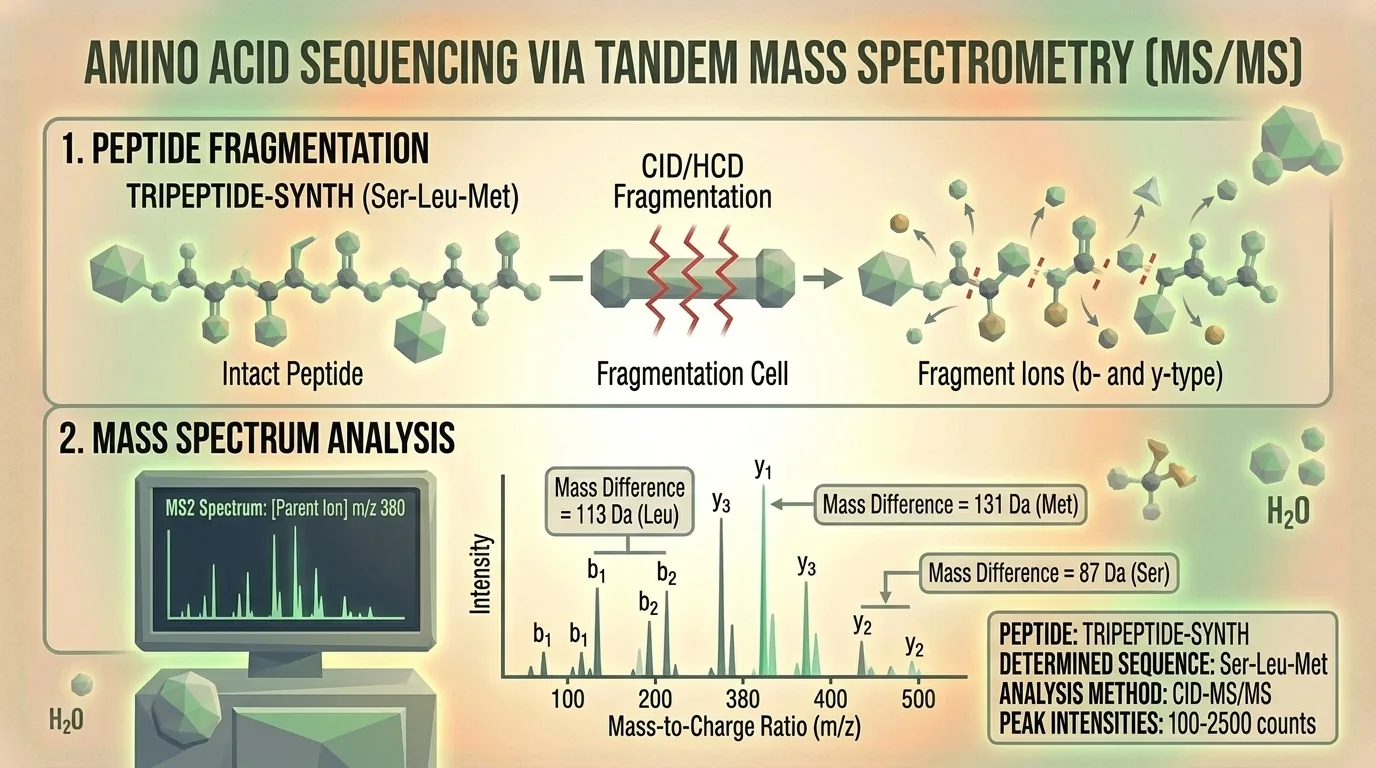
Mass spectrometry confirms that a peptide's total molecular weight matches the expected value. However, different amino acid arrangements can produce the same molecular weight. For example, swapping leucine (Leu) and isoleucine (Ile) — which are structural isomers with identical mass — would not be detected by standard MS but would alter the peptide's biological activity.
Sequencing Methods
Tandem Mass Spectrometry (MS/MS)
The most common sequencing approach for research peptides is tandem mass spectrometry (MS/MS). The peptide is fragmented inside the mass spectrometer, and the mass differences between consecutive fragments reveal the identity of each amino acid in sequence. This is fast, sensitive, and can be performed alongside standard MS identity confirmation.
Edman Degradation
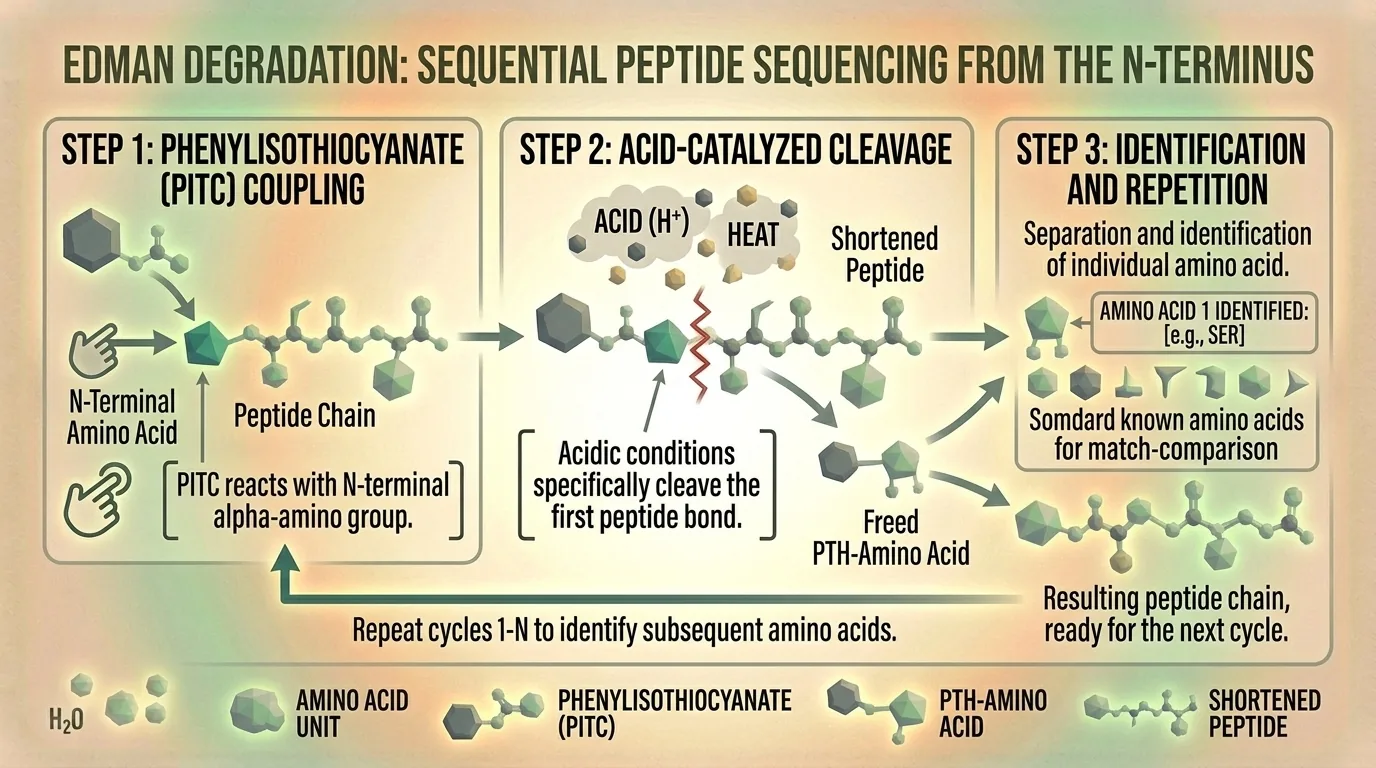
A classical chemical sequencing method that removes and identifies one amino acid at a time from the N-terminus. While slower than MS/MS, Edman degradation provides unambiguous confirmation of the sequence and can distinguish isomers like leucine and isoleucine that MS/MS sometimes cannot.
| Method | Speed | Isomer Resolution | Typical Use |
|---|---|---|---|
| MS/MS | Fast (minutes) | Limited for Leu/Ile | Routine verification |
| Edman Degradation | Slower (hours) | Full resolution | Critical sequence confirmation |
When Is Sequencing Required?
For most commercial research peptides, the combination of HPLC purity and MS identity confirmation is sufficient. Sequencing is typically reserved for:
- Novel or custom-synthesized peptides where the sequence hasn't been verified before
- Peptides containing structurally similar amino acids (Leu/Ile, Asp/isoAsp)
- High-value research where sequence accuracy is critical to experimental outcomes
- Regulatory or publication requirements demanding full sequence verification
Key Takeaways
- Sequencing confirms the correct amino acids are in the correct positions — beyond what mass and purity alone can verify
- MS/MS is the fastest and most common sequencing method for research peptides
- Edman degradation provides definitive sequence confirmation, including isomer resolution
- Standard HPLC + MS verification is sufficient for most research applications
- Sequencing adds value for novel peptides, isomer-containing sequences, and high-stakes research
Verified Research Peptides
Every MHS Longevity compound is verified by HPLC and mass spectrometry, with full COA documentation.
Shop Peptides