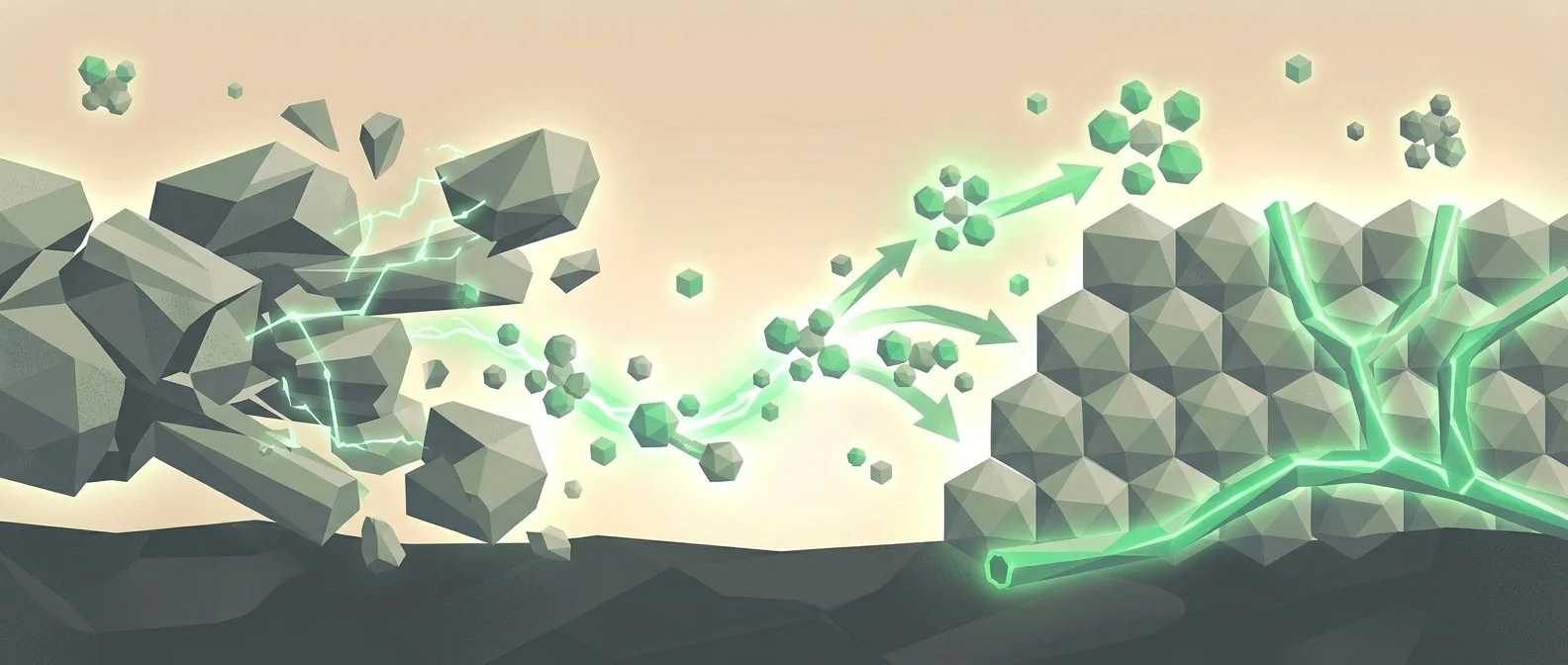
BPC-157 and TB-500 appear together in tissue-repair research literature so frequently that they're often discussed as interchangeable, but they are entirely different molecules. They differ in origin, sequence length, proposed mechanism, and the kinds of research questions each is best suited to. This guide walks through the differences a researcher evaluating both compounds should understand.
At a glance
- BPC-157 is a 15-amino-acid synthetic peptide derived from a gastric protective protein
- TB-500 is a synthetic fragment of the 43-amino-acid actin-sequestering protein thymosin β4
- BPC-157 research centers on cytoprotection and gastrointestinal-tissue models
- TB-500 research centers on actin-binding, cell migration, and angiogenesis
- Both are supplied for laboratory research only — neither is FDA-approved for human use
Origin and structure
BPC-157 — "Body Protection Compound 157" — is a synthetic peptide based on a 15-amino-acid sequence first identified in human gastric juice in the 1990s. Its sequence is Gly-Glu-Pro-Pro-Pro-Gly-Lys-Pro-Ala-Asp-Asp-Ala-Gly-Leu-Val. The molecule was characterized by a research group studying gastric-mucosal protective proteins, and the peptide fragment is what circulates in the research literature today.
TB-500 is a synthetic peptide reproducing a fragment of thymosin β4 (TB4), a 43-amino-acid endogenous protein found across multiple tissues. The TB-500 fragment includes the LKKTETQ actin-binding motif of the parent protein. The exact length and sequence vary slightly between suppliers; each batch's Certificate of Analysis documents the supplied form.
| BPC-157 | TB-500 | |
|---|---|---|
| Length | 15 amino acids | Synthetic fragment of 43-aa TB4 |
| Origin | Gastric protective protein | Thymosin β4 |
| Approx. MW | 1419.5 g/mol | Varies; documented on COA |
| Form supplied | Lyophilized white powder | Lyophilized white powder |
Proposed mechanisms in research
BPC-157's published research focuses on cytoprotection, vascular interactions, and gastrointestinal-tissue models. Mechanistic hypotheses in the literature include nitric-oxide pathway modulation and growth-factor signaling, though replication across independent research groups remains an ongoing topic in the field.
TB-500's mechanism is more cleanly characterized in biochemical terms: the LKKTETQ motif binds G-actin monomers and influences cytoskeletal dynamics. This actin-binding activity is the basis for TB-500's research interest in cell migration, angiogenesis, and wound-healing models — processes that all involve actin cytoskeletal reorganization.
Research contexts where each is used
BPC-157 appears most often in published rodent models of gastrointestinal injury, tendon and ligament research, and vascular studies. A subset of published research investigates the two peptides used together in animal injury models, reflecting an interest in whether different proposed mechanisms might be complementary.
TB-500 has a longer track record in equine veterinary research and a growing body of mammalian preclinical work focused on cardiac wound-healing and dermal repair. Its actin-binding activity makes it a useful tool in research questions that specifically involve cytoskeletal dynamics.
Quality verification — why both deserve careful testing
Both compounds are verified at MHS Longevity using independent third-party HPLC and Mass Spectrometry. Two structural facts make quality verification especially relevant:
- BPC-157 (15 aa) is short enough that truncated synthesis products would be clearly resolved on HPLC. But proline-rich sequences are challenging to synthesize cleanly — Mass Spectrometry confirms the molecule's mass matches the full sequence.
- TB-500 is longer and the supplied form can vary in length between suppliers. Mass Spectrometry confirmation of the supplied fragment's mass is the way to know which form you have.
Choosing between BPC-157 and TB-500 for research
The choice depends on the research question. Investigations of gastrointestinal-tissue models, vascular-protective hypotheses, or short-peptide cytoprotection mechanisms point to BPC-157. Investigations of actin-cytoskeletal dynamics, cell-migration assays, or wound-healing models grounded in TB4 biology point to TB-500. Research designs that compare or combine the two should explicitly account for the structural and mechanistic differences — they are not interchangeable compounds.
View BPC-157 10mg
Independently HPLC + MS tested at 99%+ purity. Certificate of Analysis published per batch.
View TB-500 10mg
Independently HPLC + MS tested at 99%+ purity. Certificate of Analysis published per batch.
Frequently asked questions
Frequently Asked Questions
No. BPC-157 is a 15-amino-acid synthetic peptide derived from a gastric protective protein. TB-500 is a synthetic fragment of thymosin β4. Their sequences, sources, and proposed mechanisms in the research literature are entirely different.
Some published research investigates them together in animal injury models, hypothesizing that their proposed mechanisms might be complementary. However, the bulk of the literature on each compound is separate. Researchers designing combined-administration protocols should be aware that the field's evidence base for the combination is smaller than for either compound alone.
Neither BPC-157 nor TB-500 is approved by the FDA or any other regulatory body for human or veterinary use. Both are supplied strictly for laboratory research.
Both compounds are sent to an independent third-party laboratory for HPLC and Mass Spectrometry analysis before release. Each batch carries its own Certificate of Analysis with documented batch ID, test date, testing method, and verified 99%+ purity result.