

Exercise creates controlled tissue stress — micro-tears in muscle fibers, tendon strain, and inflammatory signaling — that triggers adaptive repair processes. The quality and speed of this recovery determines training adaptation, performance progression, and injury resilience.
Several peptide compounds are being studied for their interactions with recovery-related biological pathways. This article reviews the key compounds, their proposed mechanisms, and the current evidence landscape.
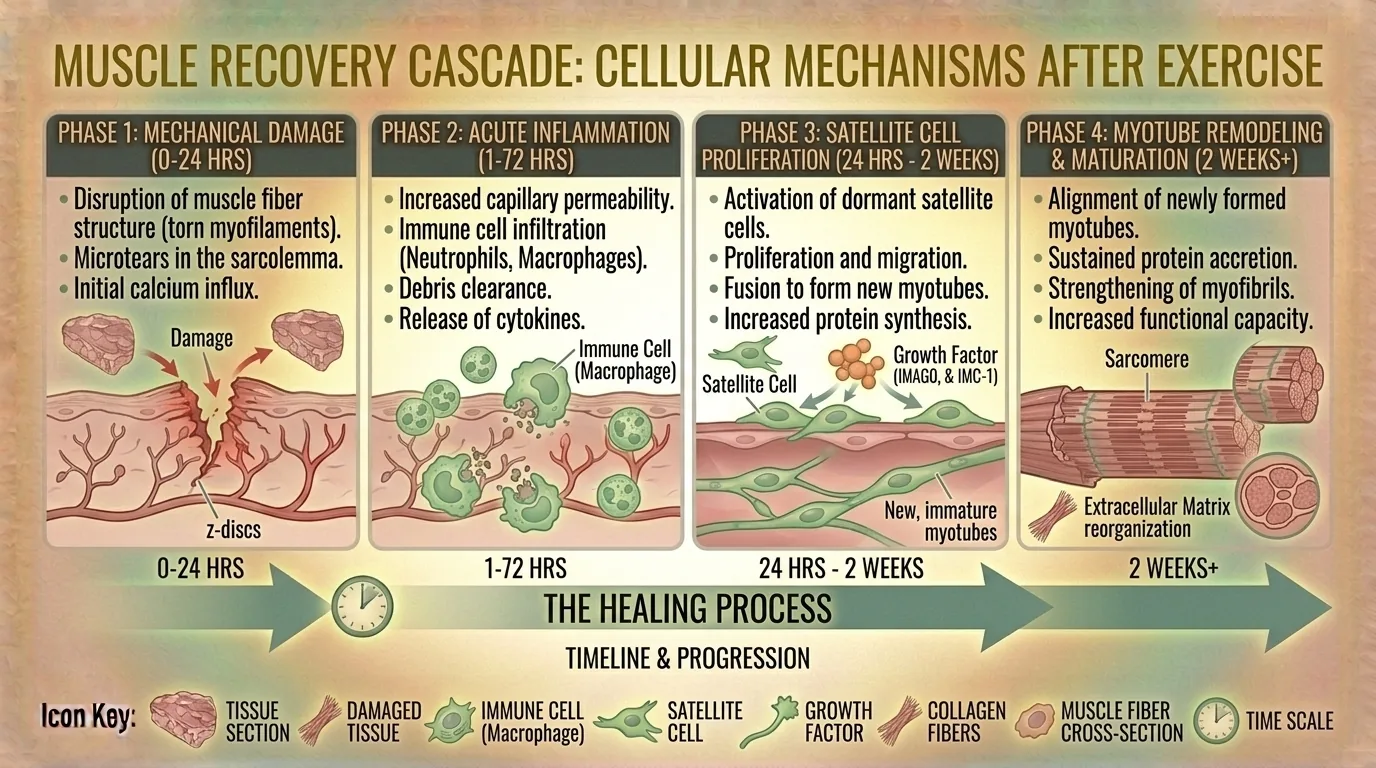
The Recovery Cascade
- Damage phase — Exercise creates mechanical stress and micro-tears in muscle fibers
- Inflammatory response — Immune cells infiltrate damaged tissue, clearing debris
- Proliferation — Satellite cells activate and proliferate, beginning tissue repair
- Remodeling — New tissue matures and strengthens, often exceeding pre-exercise capacity (supercompensation)
Research Compounds
TB-500 (Thymosin Beta-4 Fragment)
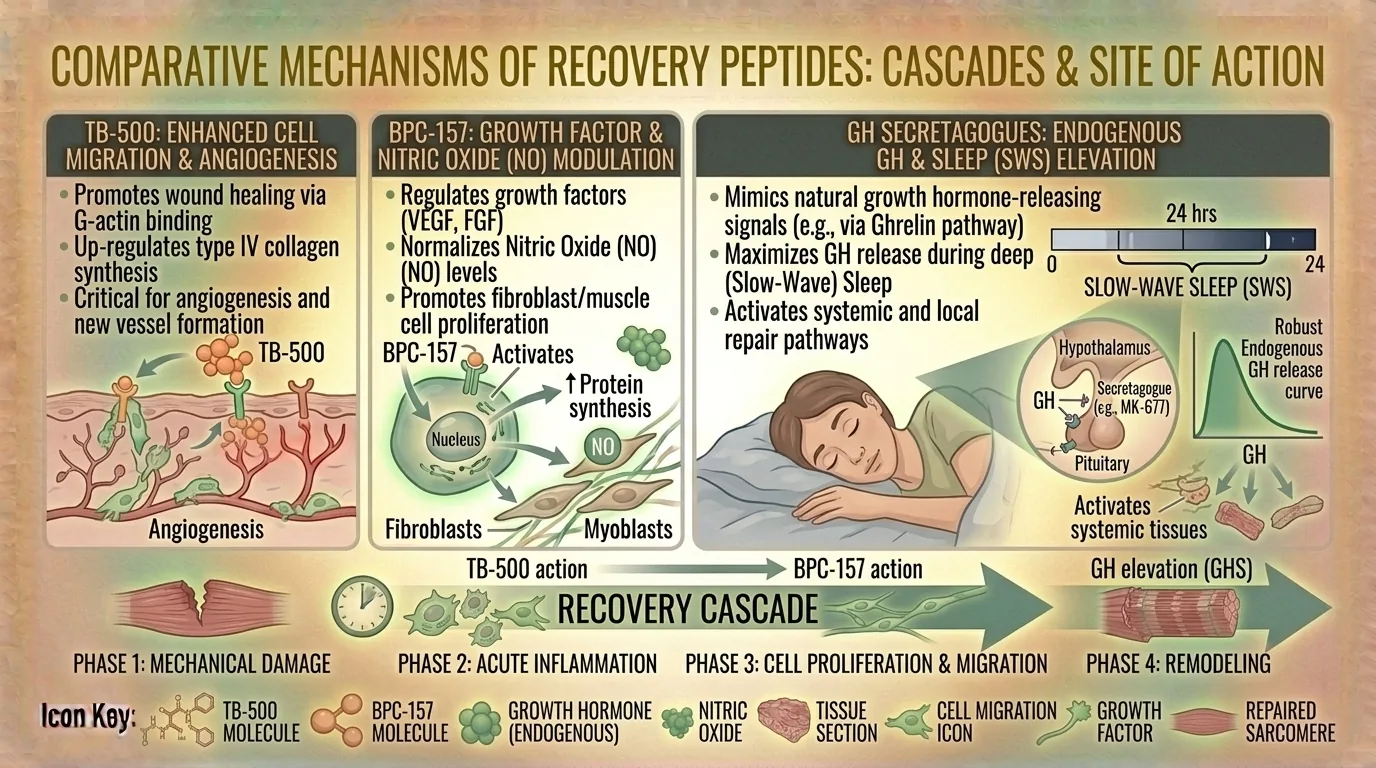
TB-500 is a synthetic fragment of Thymosin Beta-4, a naturally occurring 43-amino acid peptide involved in cell migration, angiogenesis, and wound healing. Research has investigated its role in promoting actin polymerization (critical for cell movement) and blood vessel formation in injured tissue.
BPC-157
As discussed in our detailed BPC-157 review, this compound is studied for tissue repair across multiple systems — including tendons, muscles, and ligaments that are commonly stressed during exercise.
GH Secretagogues
Growth hormone plays a well-documented role in tissue repair and protein synthesis. Secretagogues like Ipamorelin and CJC-1295 are studied for their ability to amplify endogenous GH pulses, which naturally peak during sleep — the primary recovery window.
Key Takeaways
- Exercise recovery follows a predictable cascade: damage, inflammation, proliferation, remodeling
- TB-500 is studied for cell migration and angiogenesis in injured tissue via Thymosin Beta-4 pathways
- BPC-157 targets multiple repair mechanisms including growth factor signaling and NO system modulation
- GH secretagogues support recovery indirectly through endogenous growth hormone elevation
- Most recovery peptide evidence is preclinical — controlled human exercise-recovery trials are limited
Recovery Research Peptides
Explore verified compounds for tissue repair and recovery research.
Shop Peptides