Body Protection Compound-157 (BPC-157) is a synthetic pentadecapeptide derived from a protective protein found in human gastric juice. It has become one of the most extensively studied regenerative peptides, with over 100 published studies examining its effects on tissue repair across multiple organ systems.
Proposed Mechanisms of Action
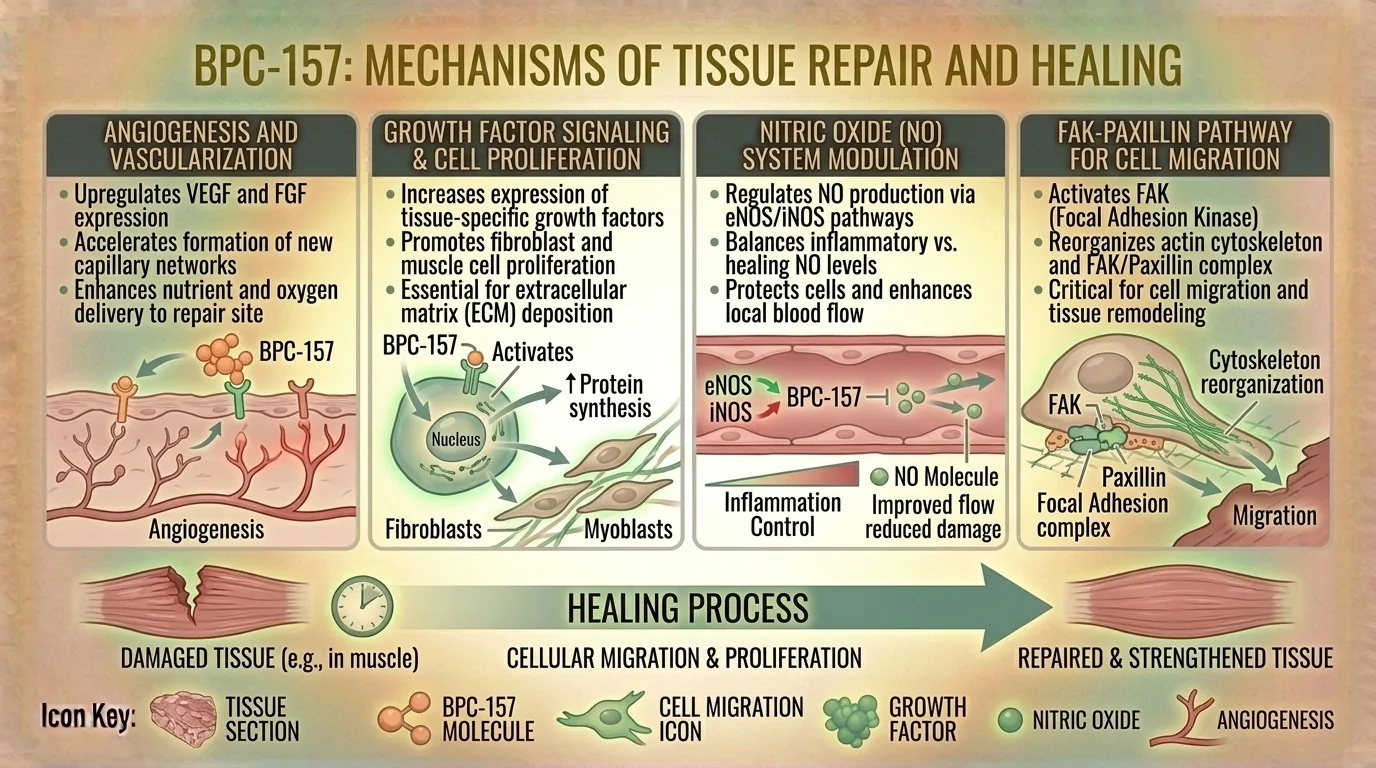
BPC-157 research has identified several potential mechanisms through which it may support tissue repair processes:
- Angiogenesis promotion — Studies suggest BPC-157 may upregulate VEGF (vascular endothelial growth factor), promoting new blood vessel formation in damaged tissue
- Growth factor modulation — Research indicates interactions with EGF, FGF, and other growth factor pathways involved in tissue regeneration
- NO system modulation — BPC-157 appears to interact with the nitric oxide system, which regulates blood flow and inflammation
- FAK-paxillin pathway — Evidence suggests activation of focal adhesion kinase signaling, which is involved in cell migration and wound closure
Tissue Types Studied
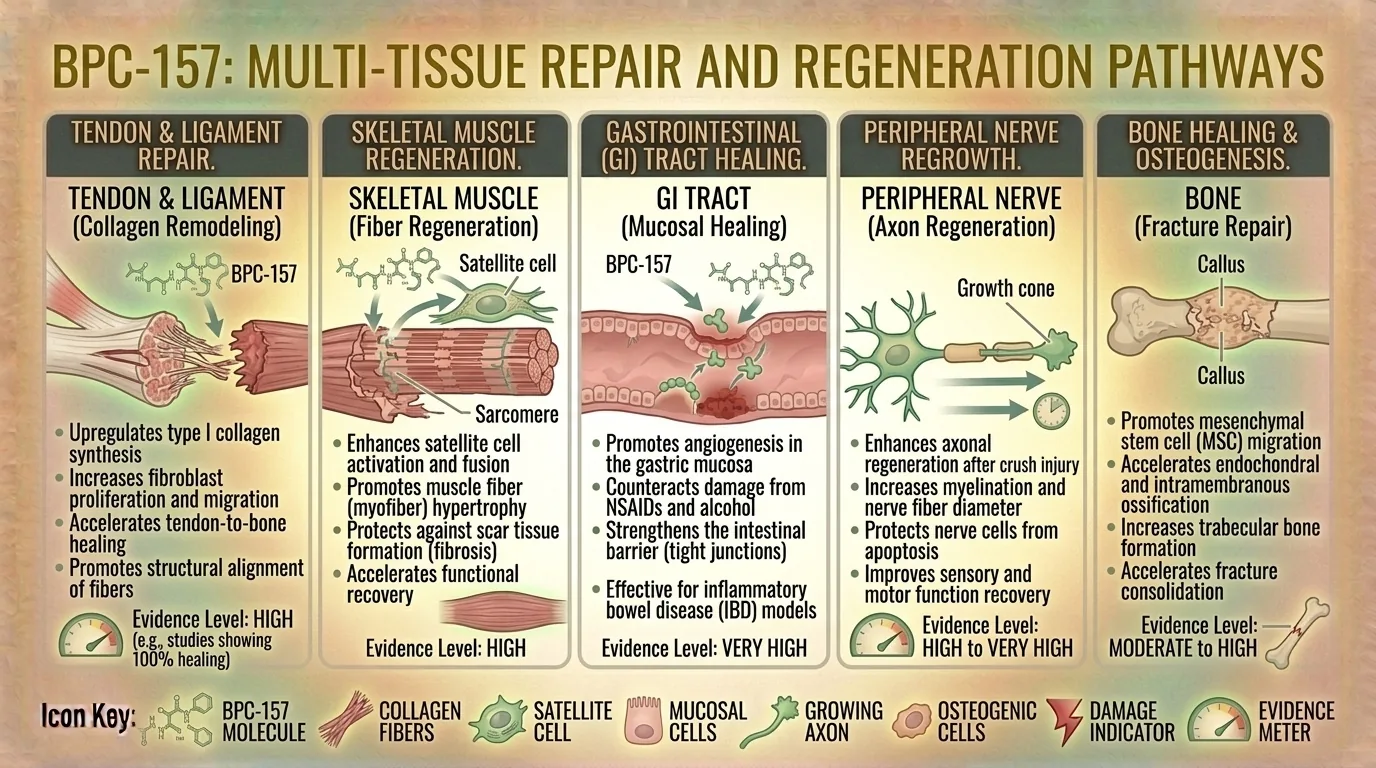
| Tissue Type | Research Focus | Evidence Level |
|---|---|---|
| Tendon/ligament | Transected tendon healing, collagen organization | Moderate — multiple animal studies |
| Muscle | Crush injury recovery, muscle healing | Moderate — preclinical data |
| Gastrointestinal | Mucosal protection, ulcer healing, IBD models | Moderate — extensive preclinical |
| Nerve | Peripheral nerve regeneration, transection models | Preliminary — animal models |
| Bone | Fracture healing, bone-tendon junction repair | Preliminary — limited studies |
Administration Routes Studied
BPC-157 has been studied via multiple administration routes in preclinical models, including subcutaneous injection (local to injury site), intraperitoneal injection, and oral administration. Notably, some studies report systemic effects from local administration, suggesting the compound may have both local and systemic activity profiles.
Key Takeaways
- BPC-157 is a 15-amino acid pentadecapeptide derived from human gastric protective protein
- Proposed mechanisms include angiogenesis, growth factor modulation, NO system interaction, and FAK-paxillin signaling
- Research spans tendons, muscles, GI tissue, nerves, and bone — with the strongest data in tendon/GI models
- Most evidence comes from preclinical (animal) studies — controlled human trials are limited
- Both local and systemic administration routes have shown activity in research models
BPC-157 5mg — Research-Grade
Independently verified to 99%+ purity. Certificate of Analysis available for every lot.