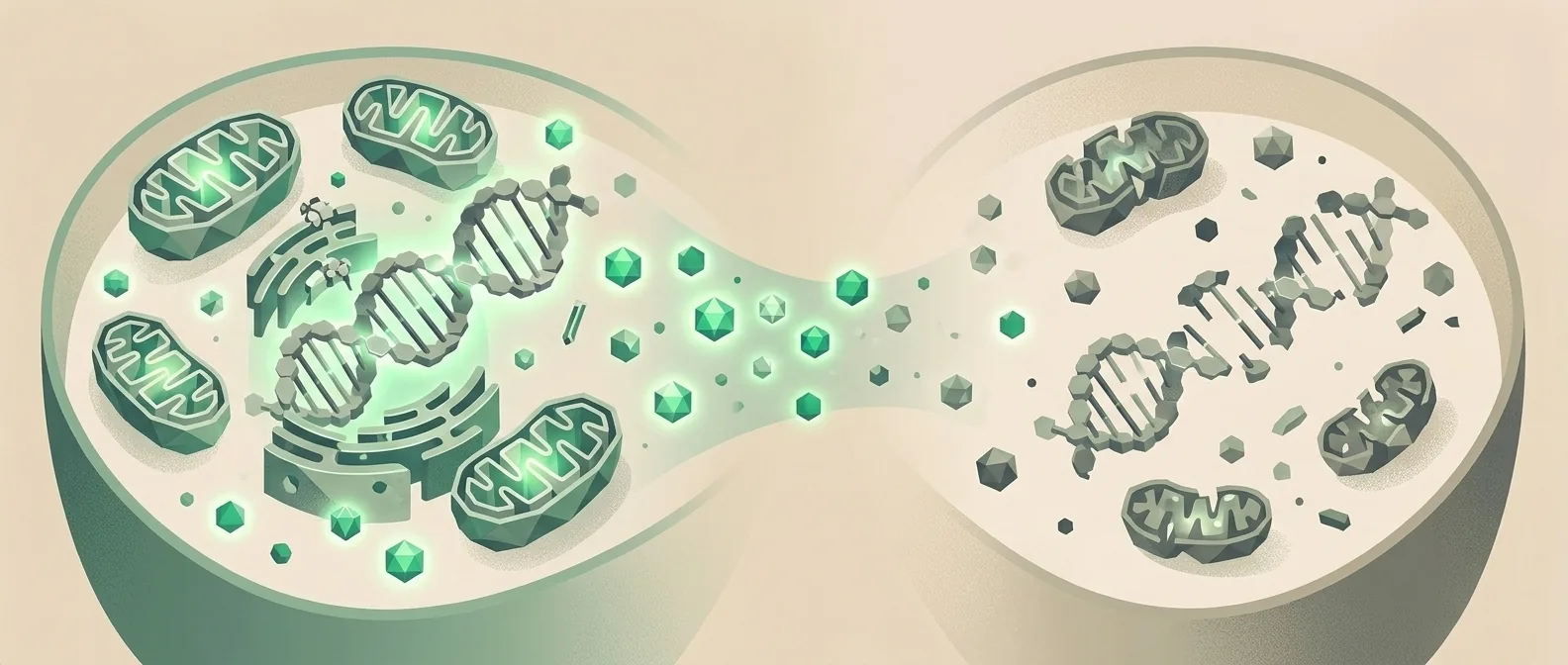
Caloric restriction (CR) — reducing caloric intake by 20–40% without malnutrition — is the most consistently replicated intervention for extending lifespan across species from yeast to primates. The biological mechanisms driving this effect include enhanced autophagy, improved insulin sensitivity, reduced inflammation, and increased mitochondrial efficiency.
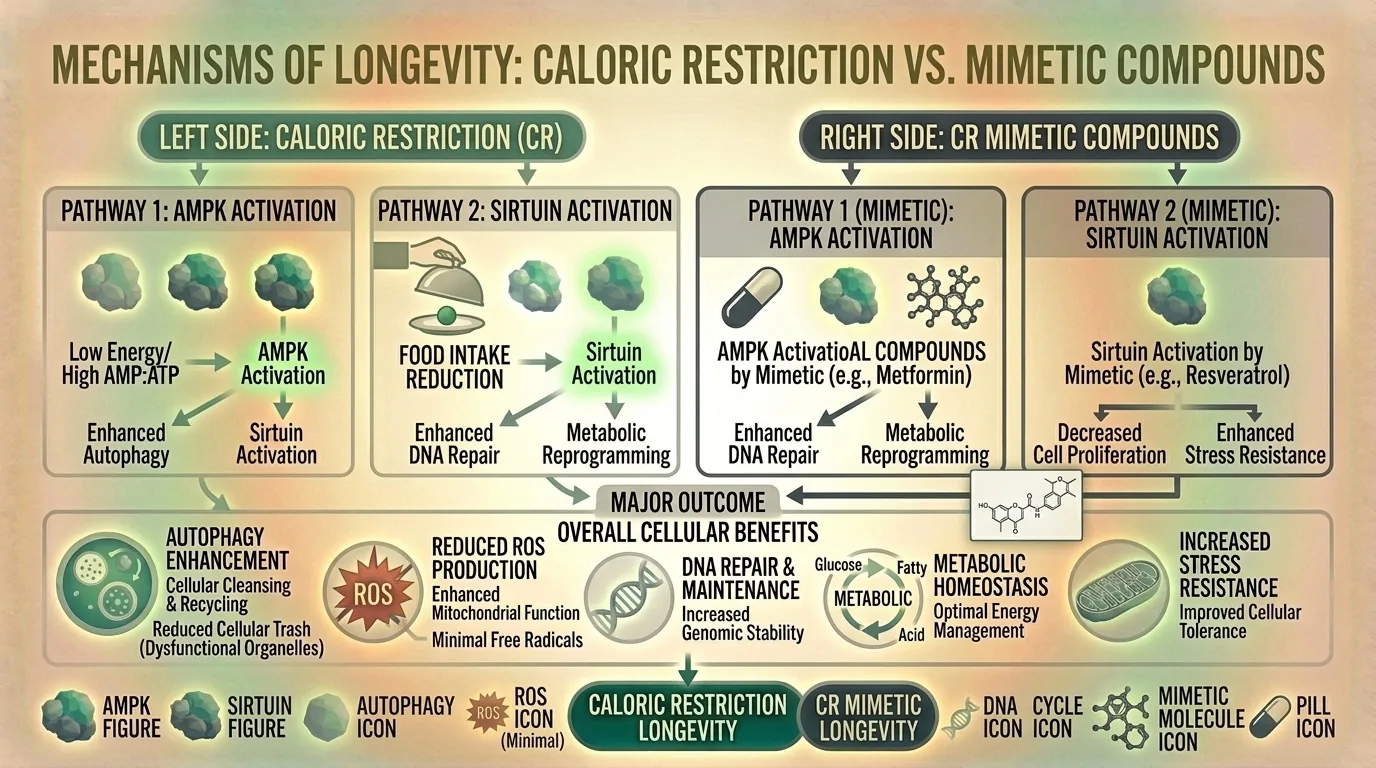
Caloric restriction mimetics (CRMs) are compounds that aim to activate these same pathways pharmacologically, without requiring actual caloric reduction. This article reviews the concept, the key biological pathways involved, and the compounds under investigation.
Key Pathways Activated by Caloric Restriction
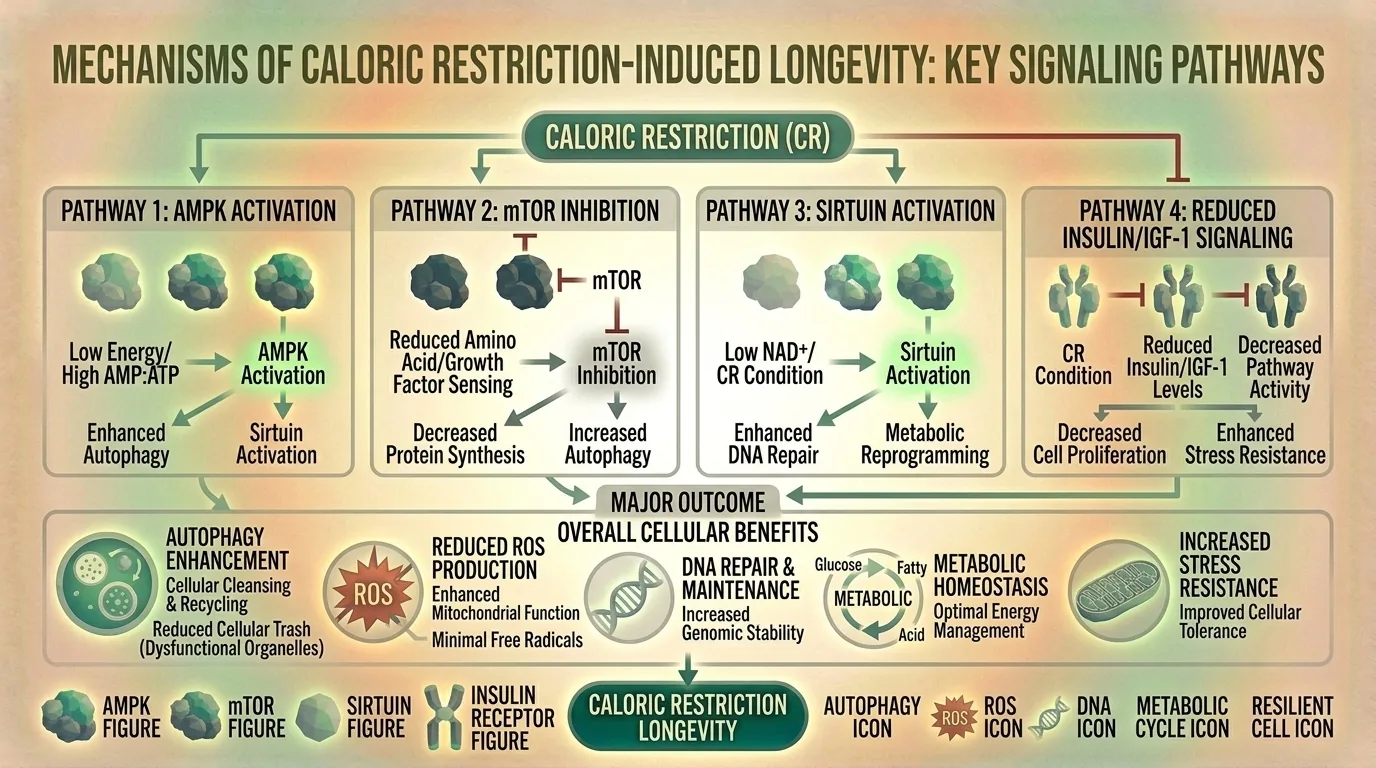
| Pathway | Function | Effect of CR |
|---|---|---|
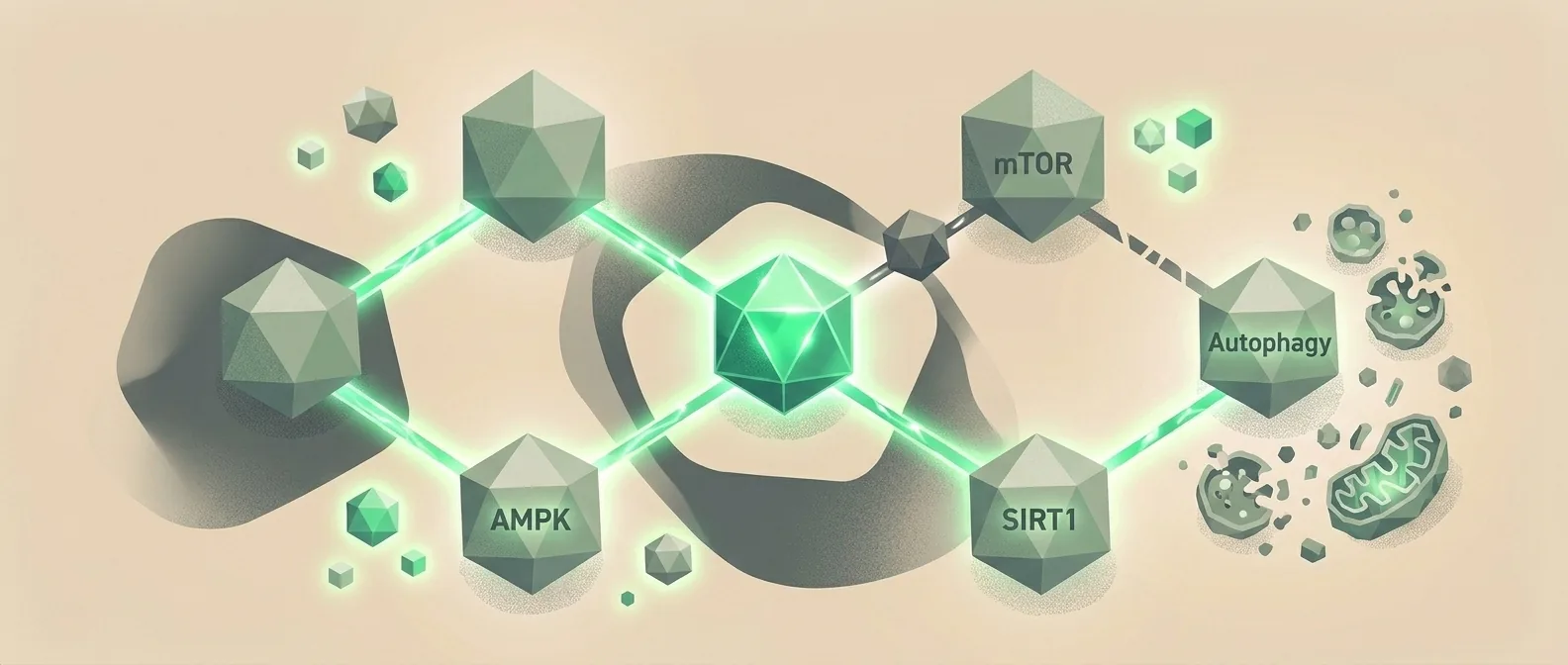
| AMPK | Cellular energy sensor | Activated — promotes catabolic processes |
| mTOR | Growth and proliferation regulator | Inhibited — shifts from growth to maintenance |
| Sirtuins | NAD+-dependent deacetylases | Activated — enhance DNA repair, mitochondrial biogenesis |
| Autophagy | Cellular cleanup mechanism | Enhanced — removes damaged proteins and organelles |
| Insulin/IGF-1 signaling | Growth hormone axis | Reduced — associated with longevity across species |
What Makes a Compound a CR Mimetic?
A true CR mimetic should activate the same protective pathways as caloric restriction without requiring reduced food intake. Specifically, researchers look for compounds that:
- Activate AMPK and/or inhibit mTOR signaling
- Enhance autophagy and cellular quality control
- Improve insulin sensitivity and metabolic efficiency
- Reduce inflammatory markers
- Extend lifespan or healthspan in model organisms
Research Compounds Under Investigation
Rapamycin, an mTOR inhibitor, has extended lifespan in multiple model organisms and is the only compound to consistently extend lifespan in genetically heterogeneous mice (the NIA Interventions Testing Program). However, its immunosuppressive properties at higher doses present challenges for long-term use.
Metformin, a widely prescribed diabetes medication, activates AMPK and has shown associations with reduced all-cause mortality in diabetic populations. The TAME (Targeting Aging with Metformin) clinical trial is investigating whether metformin can delay age-related diseases in non-diabetic individuals.
NMN and NR raise NAD+ levels, supporting sirtuin activity that mirrors CR-induced sirtuin activation. Human bioavailability has been confirmed, but long-term efficacy data for aging outcomes is still being collected.
Spermidine, a naturally occurring polyamine, induces autophagy through multiple mechanisms. Epidemiological data associates higher dietary spermidine intake with reduced cardiovascular mortality. It is one of the few CR mimetic candidates with observational human data supporting its potential benefits.
Key Takeaways
- Caloric restriction is the most replicated longevity intervention across species
- CR works through interconnected pathways: AMPK, mTOR, sirtuins, autophagy, and insulin signaling
- CR mimetics aim to activate these pathways without caloric reduction
- Several candidates (rapamycin, metformin, NAD+ precursors, spermidine) show promise at different evidence levels
- No compound has yet been definitively proven to replicate all of CR's benefits in humans
Research-Grade Compounds
Explore independently verified compounds for longevity and metabolic research.
Shop Peptides