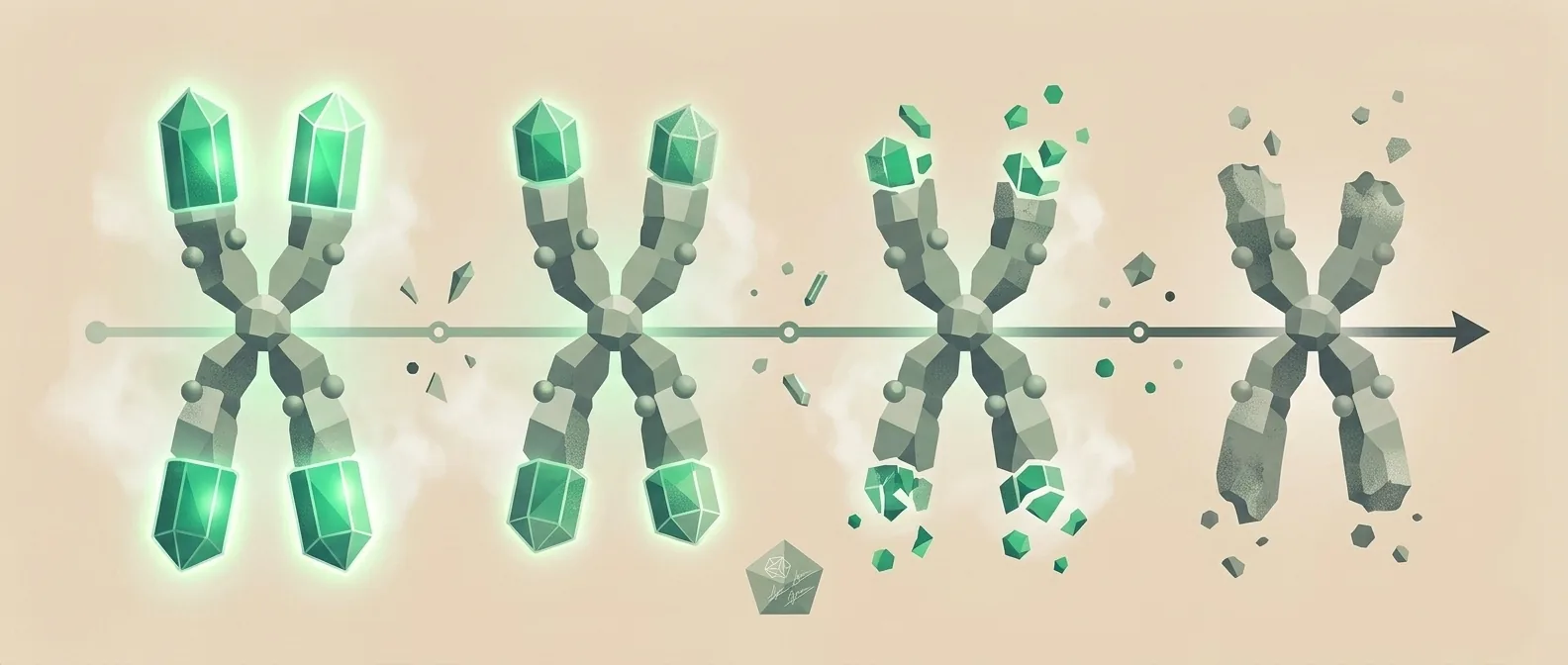
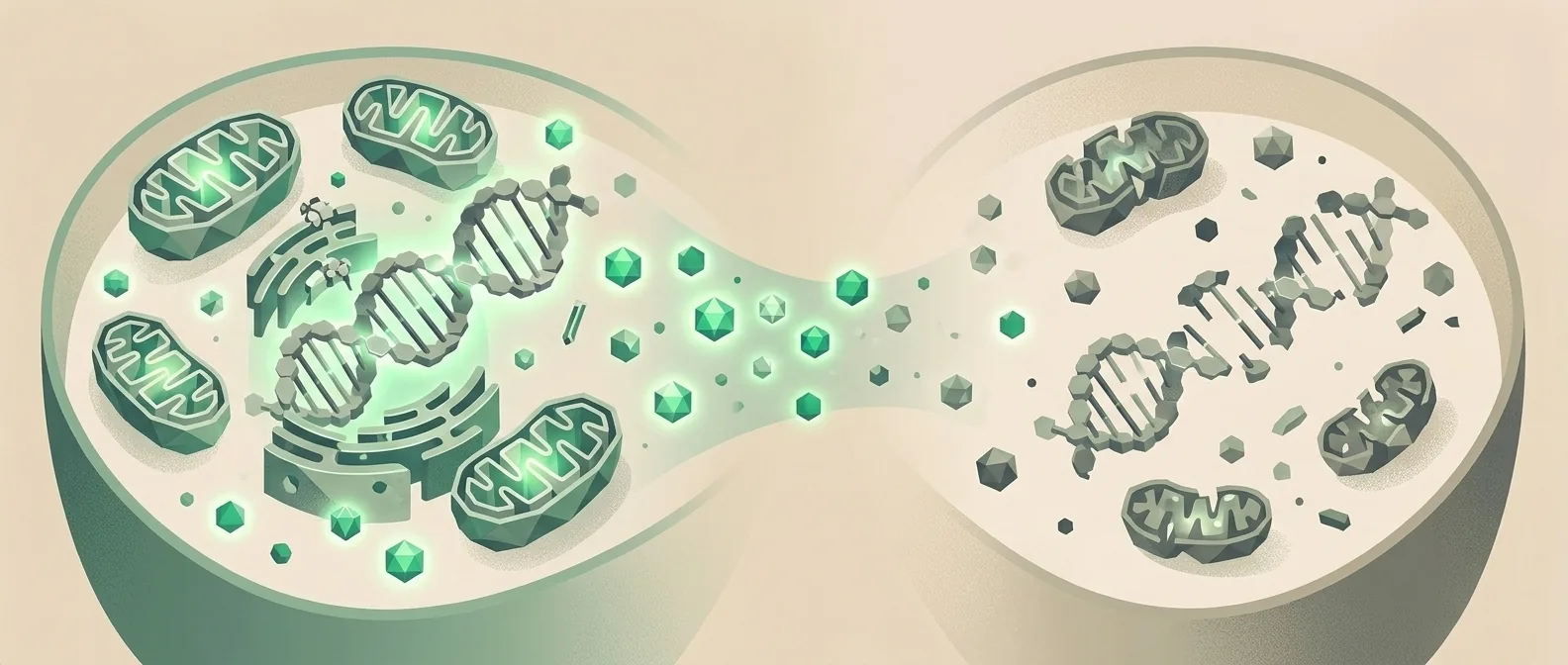
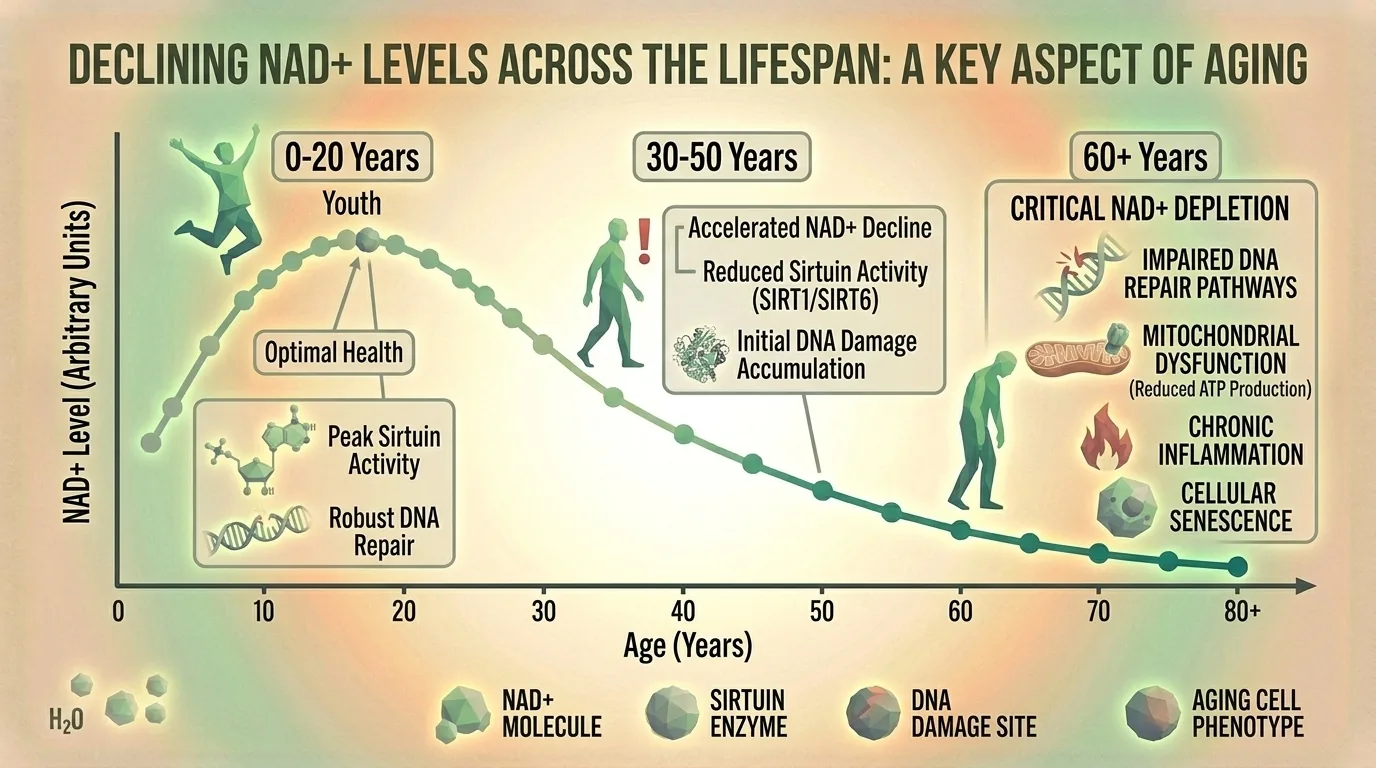
Nicotinamide adenine dinucleotide (NAD+) is a coenzyme present in every living cell, serving as a critical substrate for enzymes involved in DNA repair, energy metabolism, and cellular stress response. Research consistently demonstrates that NAD+ levels decline with age — and that this decline correlates with many hallmarks of aging.
This article reviews the current research on NAD+ biology, the pathways that regulate its availability, and the compounds being investigated for their potential to support NAD+ homeostasis.
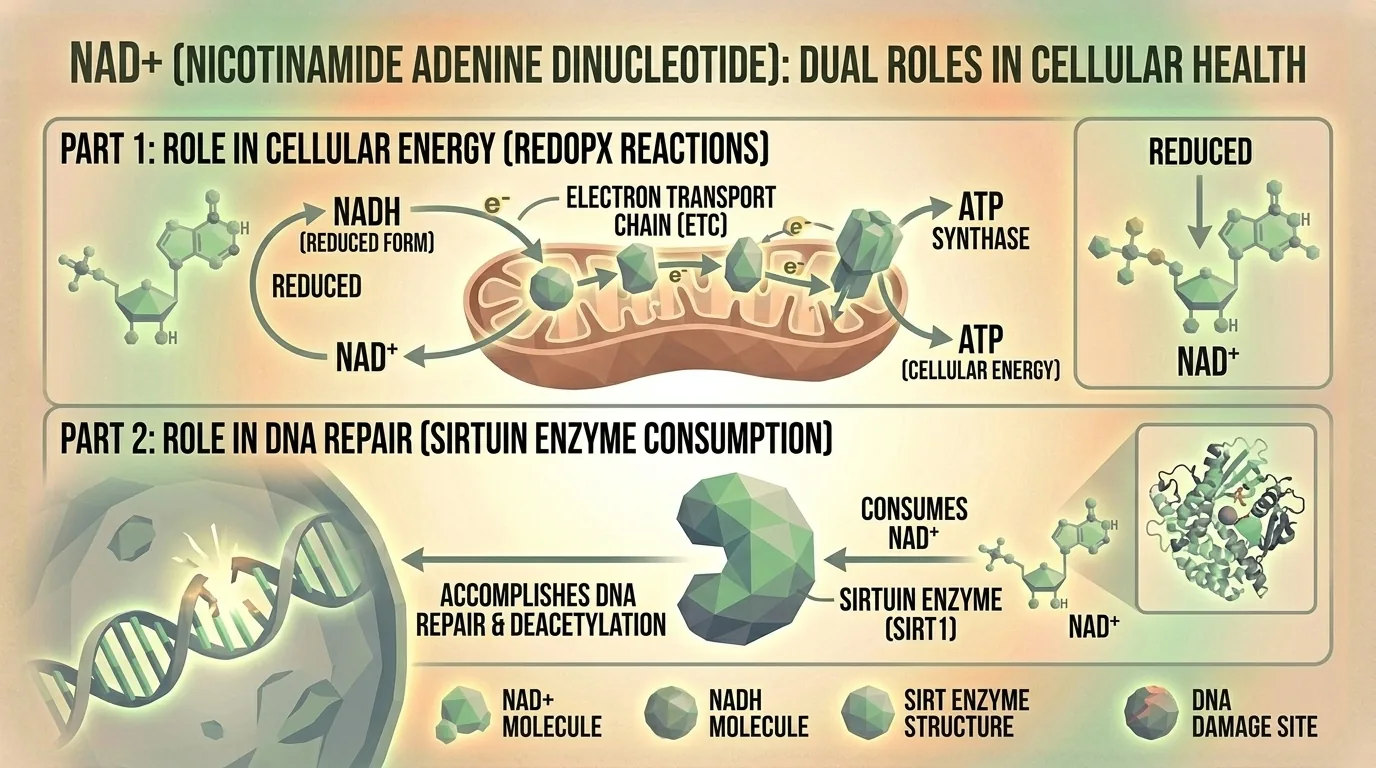
What NAD+ Does in the Cell
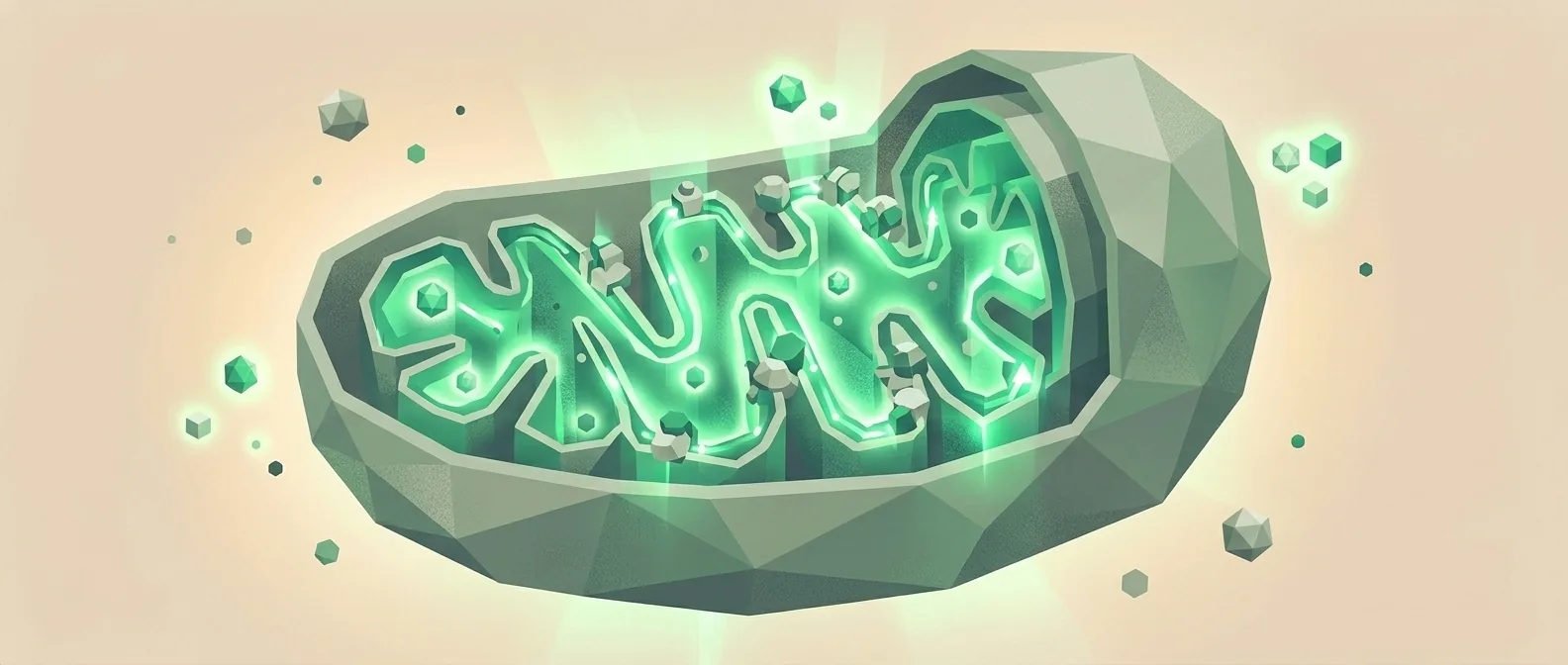
NAD+ functions in two primary capacities: as an electron carrier in metabolic reactions (shuttling electrons in the mitochondrial electron transport chain) and as a substrate consumed by signaling enzymes. The second role is particularly relevant to aging research.
Sirtuins: NAD+-Dependent Regulators
Sirtuins (SIRT1-7) are a family of enzymes that require NAD+ as a co-substrate to function. They regulate DNA repair, mitochondrial biogenesis, inflammation, and circadian rhythms. When NAD+ levels decline, sirtuin activity decreases — potentially accelerating multiple aging-associated processes simultaneously.
PARPs: DNA Repair Enzymes
Poly(ADP-ribose) polymerases (PARPs) also consume NAD+ as they repair DNA damage. As DNA damage accumulates with age, PARP activity increases, consuming more NAD+ and further reducing the pool available for sirtuin-mediated maintenance functions — creating a metabolic competition that may contribute to age-related decline.
Why NAD+ Declines with Age
Multiple mechanisms contribute to age-related NAD+ decline:
- Increased consumption — Rising DNA damage drives PARP activity and NAD+ consumption
- CD38 upregulation — The enzyme CD38 increases with age and degrades NAD+ directly
- Reduced biosynthesis — The enzymes that produce NAD+ (NAMPT, NMNAT) may become less efficient
- Chronic inflammation — Inflammatory signaling activates NAD+-consuming pathways
Research Compounds Targeting NAD+ Pathways
| Compound | Mechanism | Evidence Level |
|---|---|---|
| NAD+ (direct) | Direct supplementation of the coenzyme | Moderate — bioavailability research ongoing |
| NMN | NAD+ precursor via NMNAT pathway | Moderate — human trials in progress |
| NR (Nicotinamide Riboside) | NAD+ precursor via NRK pathway | Moderate — human bioavailability confirmed |
| 5-Amino 1MQ | NNMT inhibitor — blocks NAD+ degradation | Preliminary — preclinical data |
| CD38 inhibitors | Block CD38-mediated NAD+ degradation | Preliminary — preclinical data |
It is important to note that while the connection between NAD+ decline and aging is well-established in preclinical models, translating these findings into practical human interventions remains an active area of research. Long-term human efficacy data for most NAD+-targeting compounds is still being generated.
Key Takeaways
- NAD+ is essential for cellular energy, DNA repair, and sirtuin-mediated maintenance functions
- NAD+ levels decline with age due to increased consumption, CD38 activity, and reduced biosynthesis
- The competition between PARPs (repair) and sirtuins (maintenance) for limited NAD+ is a key aging mechanism
- Multiple research compounds target NAD+ pathways through different mechanisms
- Human clinical data is still accumulating — most findings come from preclinical models
NAD+ 500mg — Research-Grade
Independently verified to 99%+ purity. Certificate of Analysis available for every lot.