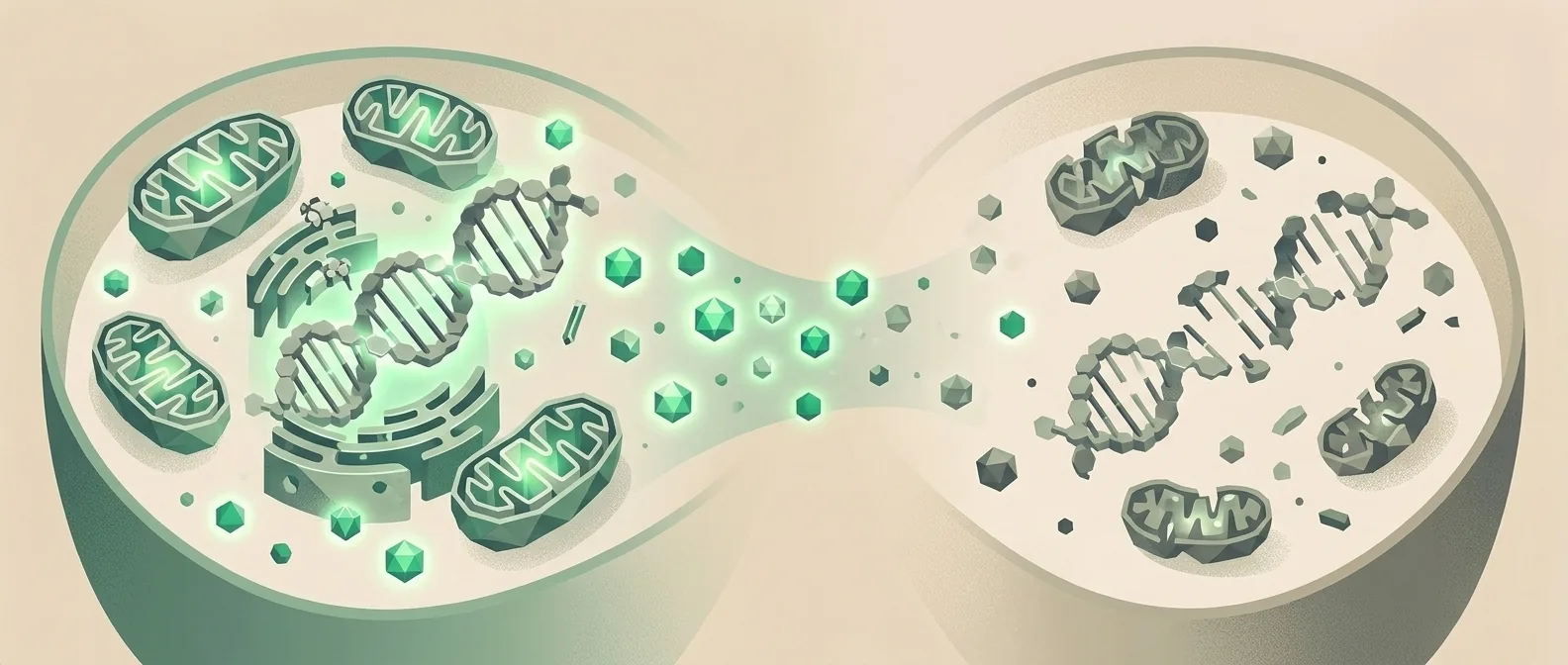
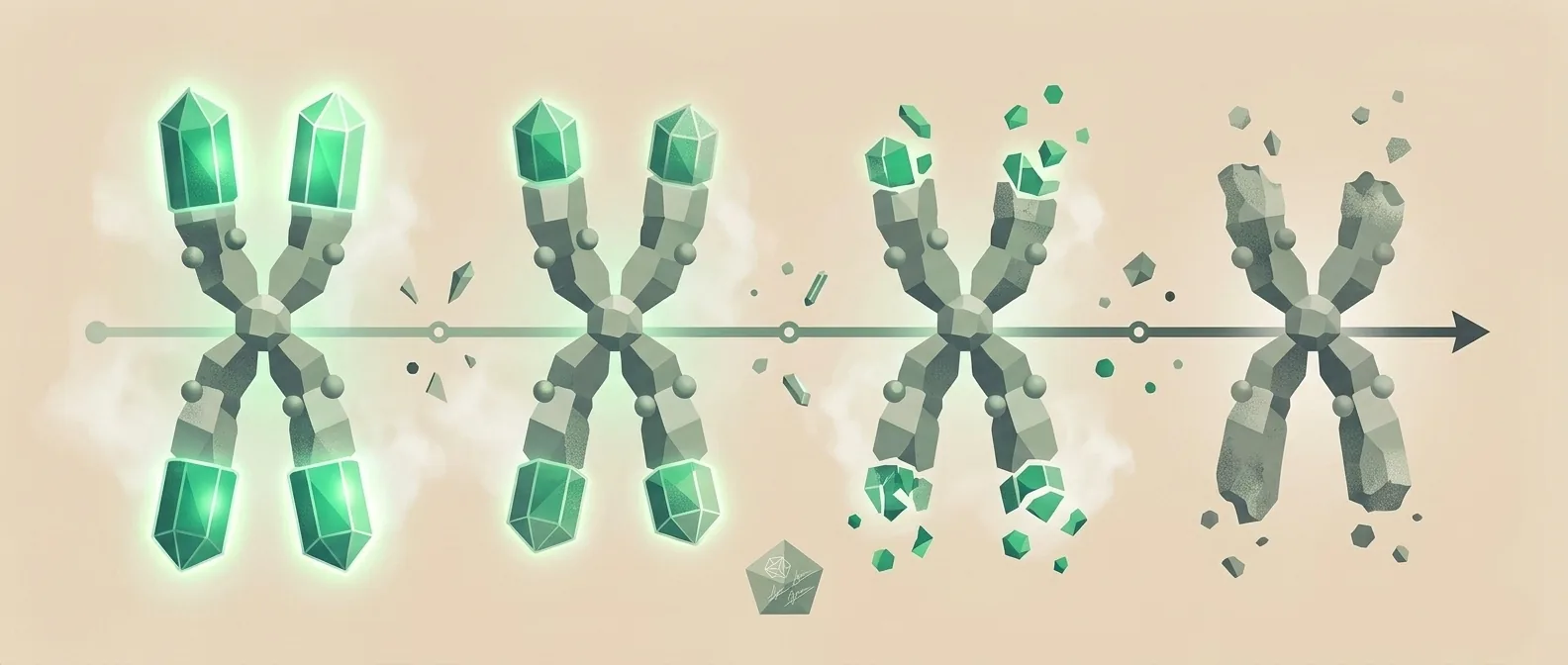
Telomeres are repetitive nucleotide sequences (TTAGGG in humans) capping the ends of chromosomes. They protect coding DNA from degradation during cell division — but shorten with each replication cycle. When telomeres become critically short, cells enter senescence or undergo apoptosis.
This shortening process has made telomere length one of the most studied biomarkers of biological aging. This article examines telomere biology and the peptide research compounds being investigated in this context.
How Telomeres Shorten
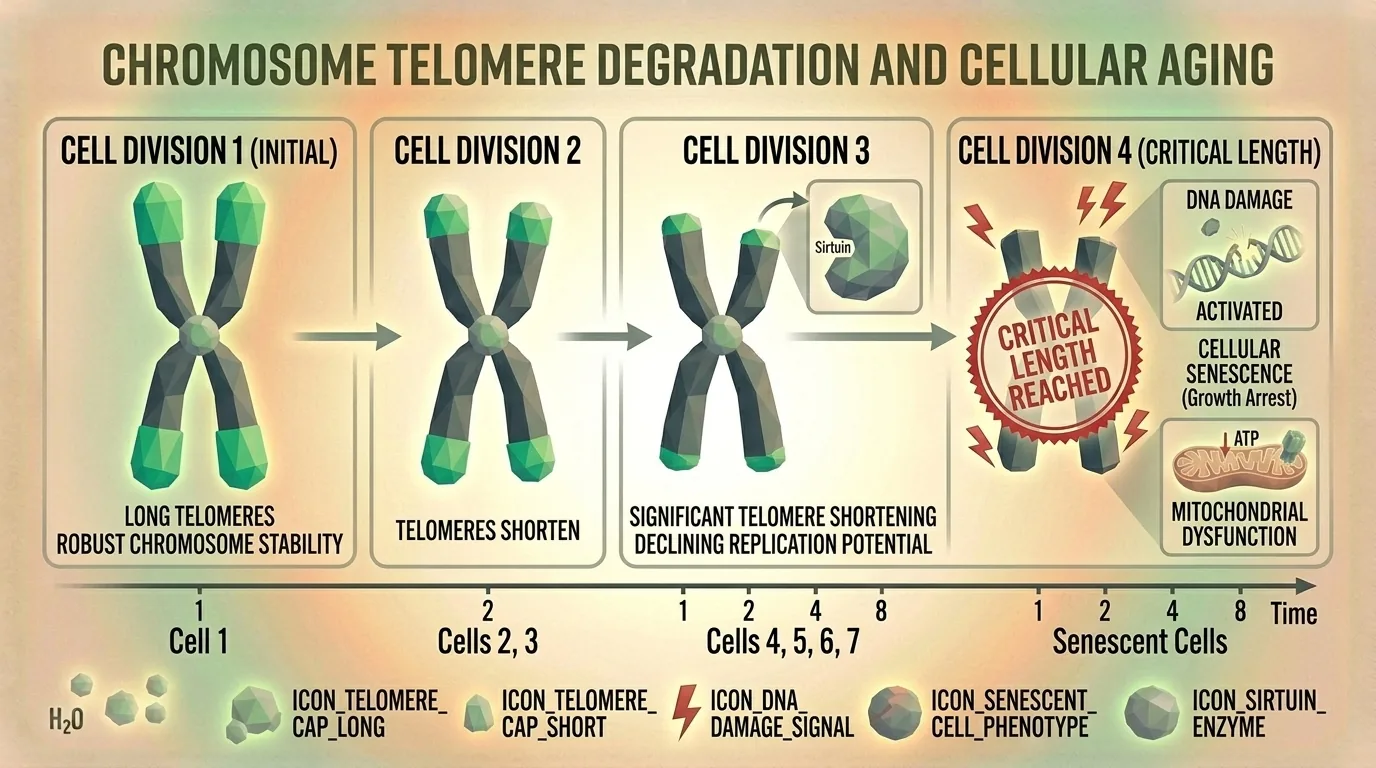
DNA polymerase cannot fully replicate the 3' end of linear chromosomes — a limitation known as the "end replication problem." Each cell division therefore results in the loss of 50–200 base pairs from telomere ends. Over a human lifespan, this progressive shortening accumulates until telomeres reach a critical length that triggers cellular senescence.
Telomerase: The Maintenance Enzyme
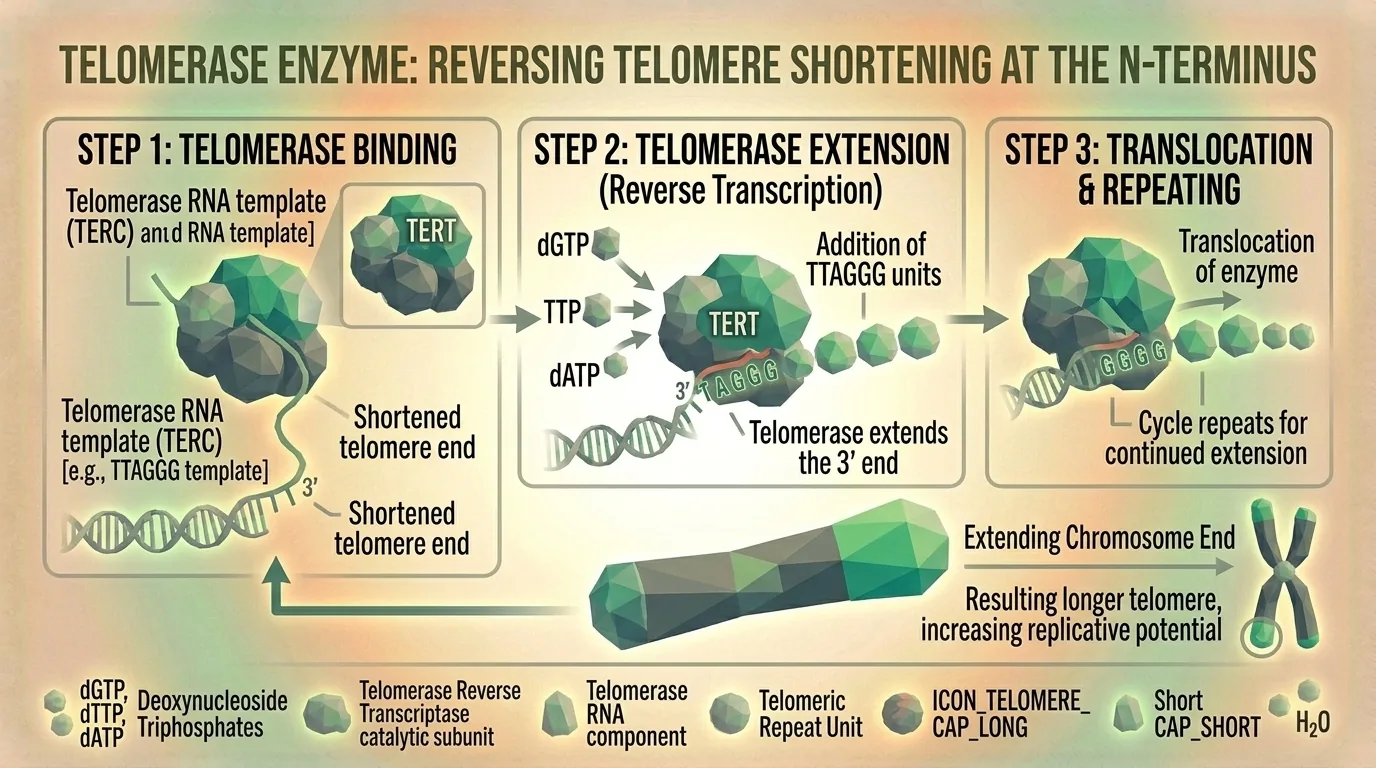
Telomerase is a ribonucleoprotein enzyme that adds telomeric repeats back to chromosome ends, counteracting replication-driven shortening. It is highly active in stem cells, germ cells, and certain immune cells — but most somatic (body) cells express little to no telomerase, explaining why their telomeres progressively shorten.
Telomere Length as a Biomarker
Research has established correlations between shorter telomere length and various age-related conditions. However, correlation is not causation — telomere length is influenced by genetics, lifestyle, stress, and environmental factors. It is best understood as one indicator within a broader aging profile.
Peptide Research in Telomere Biology
Several peptide compounds are being studied for their potential interactions with telomere maintenance pathways:
| Compound | Proposed Mechanism | Evidence Status |
|---|---|---|
| Epitalon (Epithalon) | Studied for potential telomerase activation via pineal gland pathways | Preliminary — limited human data |
| Thymalin | Thymic peptide studied for immune cell telomere maintenance | Preliminary — preclinical models |
| GHK-Cu | Copper peptide studied for gene expression regulation including DNA repair genes | Preliminary — in vitro data |
Key Takeaways
- Telomeres are protective chromosome caps that shorten with each cell division
- Telomerase can rebuild telomeres but is minimally active in most adult cells
- Telomere length correlates with biological aging but is influenced by many factors
- Peptide research in telomere biology is early-stage — primarily preclinical data
- Claims should be evaluated against actual evidence, not marketing assertions
Longevity Research Peptides
Explore research-grade compounds relevant to aging biology and cellular maintenance.
Shop Peptides