
The gastrointestinal tract is the body's largest endocrine organ, producing dozens of peptide hormones that regulate digestion, appetite, immune function, and even mood. These gut peptides operate within a complex ecosystem that includes the intestinal microbiome — trillions of microorganisms that influence peptide signaling and are, in turn, influenced by it.
Key Gut Peptides
| Peptide | Source | Primary Function |
|---|---|---|
| GLP-1 | Intestinal L-cells | Glucose regulation, appetite suppression, gastric motility |
| GLP-2 | Intestinal L-cells | Intestinal mucosal growth and repair |
| Ghrelin | Stomach fundus | Appetite stimulation, GH secretion |
| CCK | Duodenal I-cells | Gallbladder contraction, pancreatic enzyme release, satiety |
| PYY | Intestinal L-cells | Appetite suppression, intestinal motility regulation |
The Microbiome-Peptide Connection
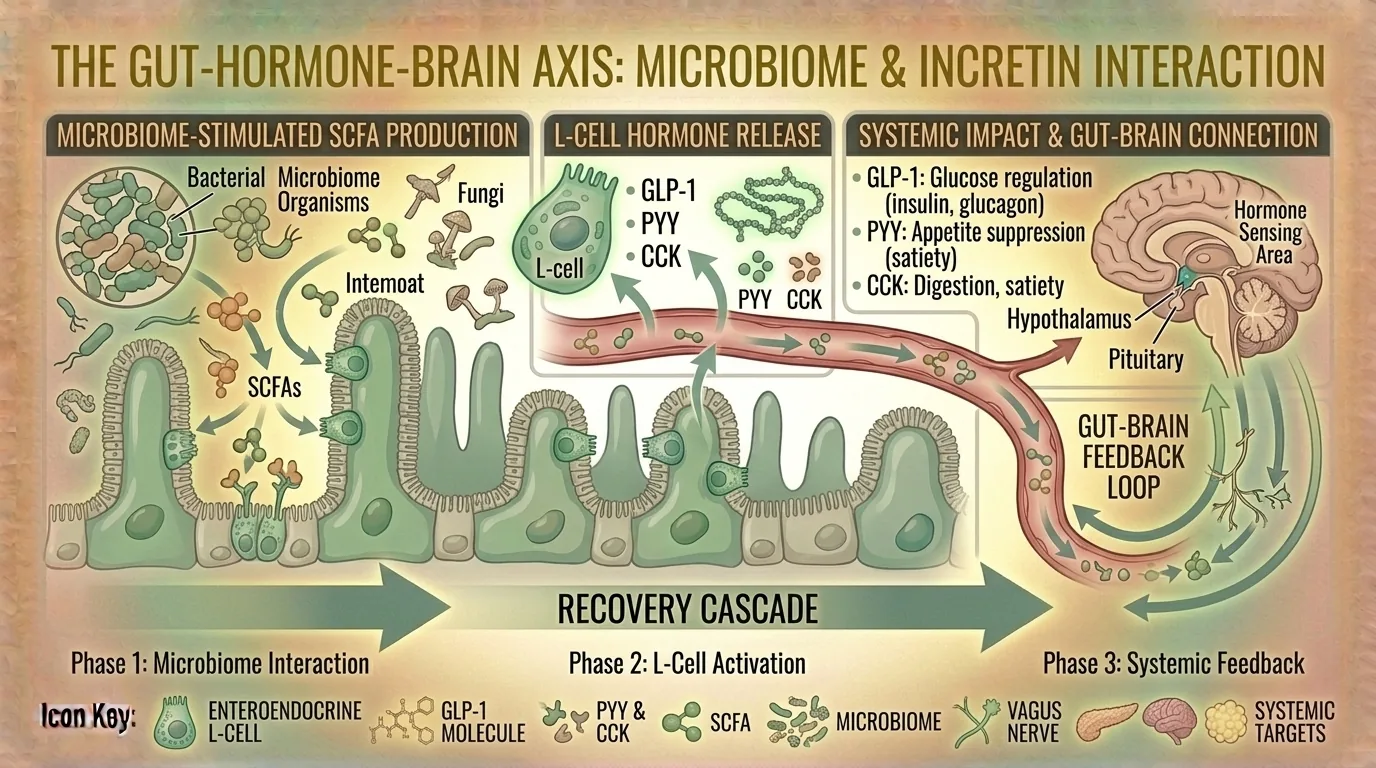
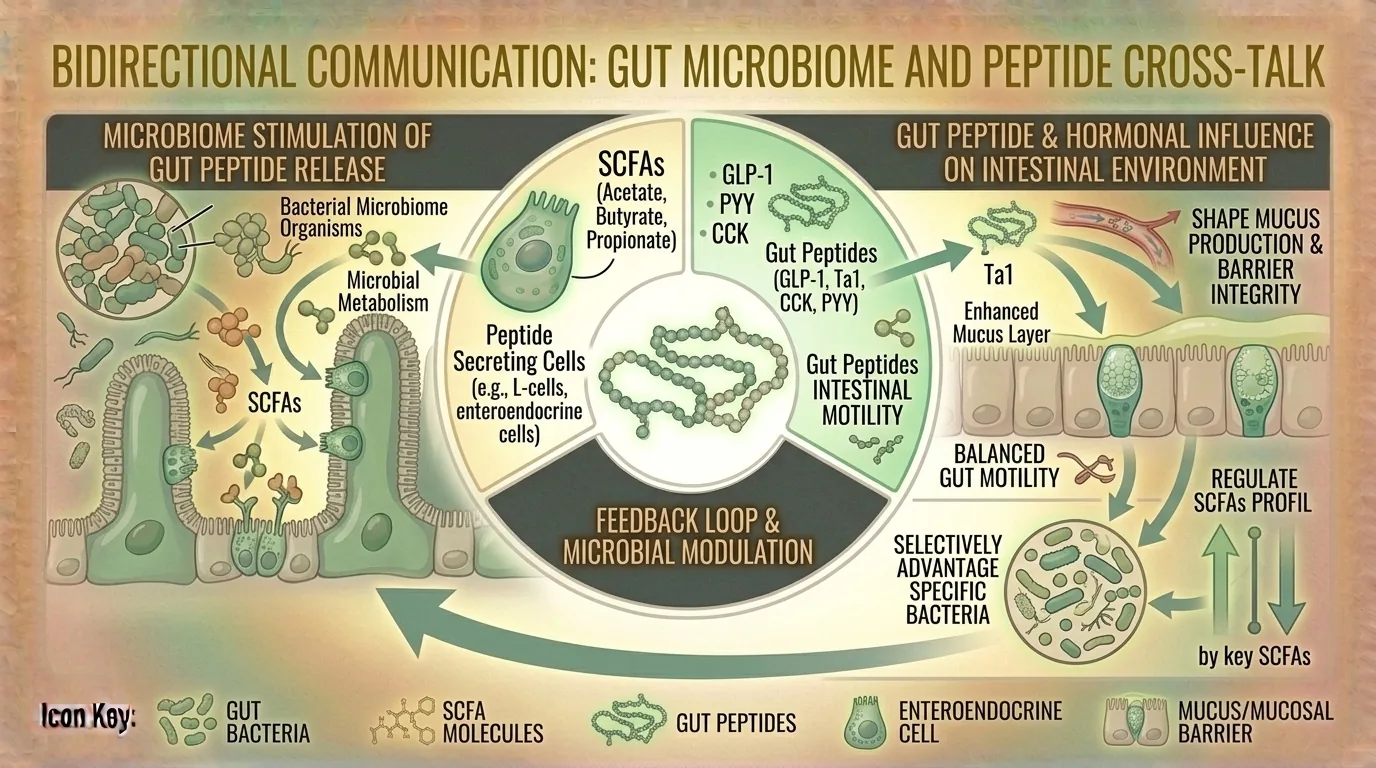
Research increasingly demonstrates bidirectional communication between gut microorganisms and peptide signaling. The microbiome influences gut peptide production through short-chain fatty acid (SCFA) production, which stimulates enteroendocrine cell activity. Conversely, gut peptides affect the microbial environment by modulating intestinal motility, mucus production, and immune tone.
BPC-157 in Gut Research
BPC-157, derived from human gastric juice protein, has been extensively studied in gastrointestinal models. Research has investigated its effects on mucosal protection, ulcer healing, and inflammatory bowel models — making it one of the most studied peptides in GI-specific contexts.
Key Takeaways
- The GI tract produces dozens of peptide hormones regulating digestion, appetite, and immunity
- The microbiome influences gut peptide production through SCFA and other metabolite signaling
- Gut peptides reciprocally affect the microbial environment through motility and immune modulation
- BPC-157 has been studied in multiple GI models including mucosal protection and ulcer healing
- The gut-peptide-microbiome axis is an active and rapidly evolving research area
GI Research Compounds
Explore verified peptides relevant to gastrointestinal and microbiome research.
Shop Peptides