
Thymosin Alpha-1 (Tα1) is a 28-amino acid peptide naturally produced by the thymus gland — the organ responsible for T-cell maturation and adaptive immune system development. As a research compound, Tα1 has been studied for its immunomodulatory properties across infectious disease, immunodeficiency, and oncology research contexts.
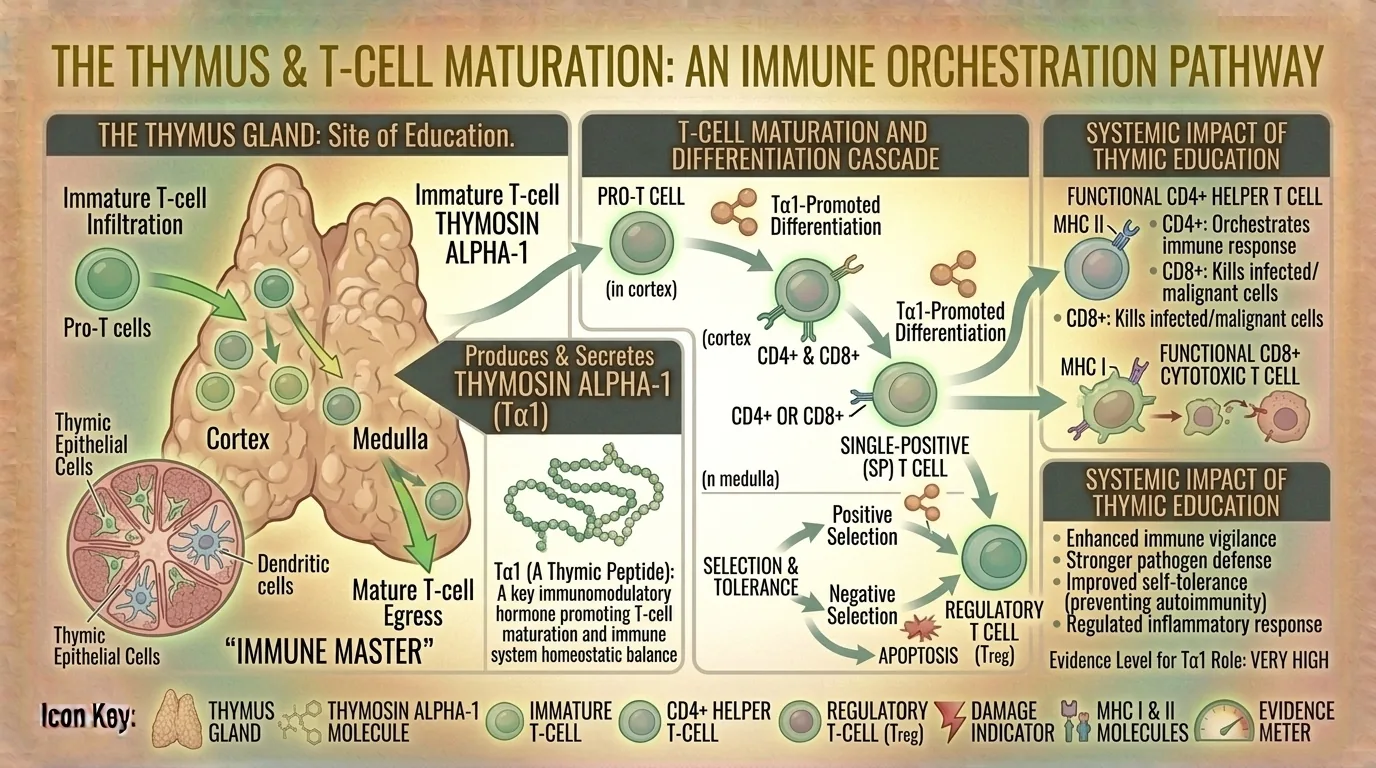
Mechanism of Action
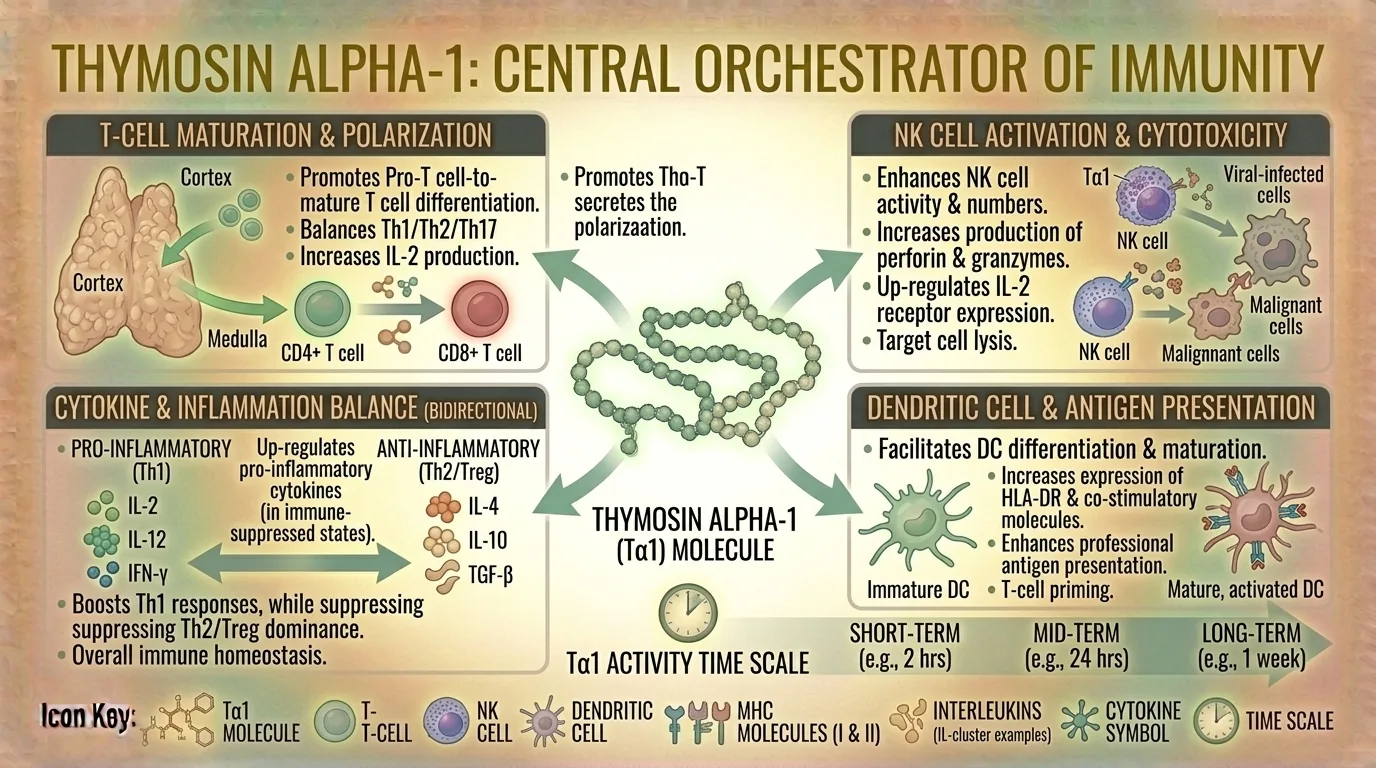
Thymosin Alpha-1 acts primarily through Toll-like receptor (TLR) signaling on dendritic cells and other antigen-presenting cells. This triggers downstream effects including:
- T-cell maturation — Promotes differentiation of immature T-cells into functional subtypes
- NK cell activation — Enhances natural killer cell cytotoxicity
- Dendritic cell maturation — Improves antigen presentation to adaptive immune cells
- Cytokine modulation — Influences the balance of pro- and anti-inflammatory cytokines
Research Applications
| Application | Proposed Mechanism | Evidence Level |
|---|---|---|
| Infectious disease | Enhanced T-cell and NK cell response | Moderate — clinical data in some regions |
| Vaccine adjuvant | Improved antigen presentation and immune memory | Moderate — preclinical + clinical |
| Immunodeficiency | T-cell maturation support in thymic insufficiency | Moderate — clinical observations |
| Oncology research | Immune surveillance enhancement | Preliminary — ongoing investigation |
Key Takeaways
- Thymosin Alpha-1 is a 28-amino acid thymic peptide with immunomodulatory properties
- It acts through TLR signaling to promote T-cell maturation, NK cell activation, and dendritic cell function
- Key distinction: immunomodulation (bidirectional) rather than simple immunostimulation
- Research spans infectious disease, vaccine adjuvant, immunodeficiency, and oncology contexts
- Clinical use is approved in some countries; research continues in others