
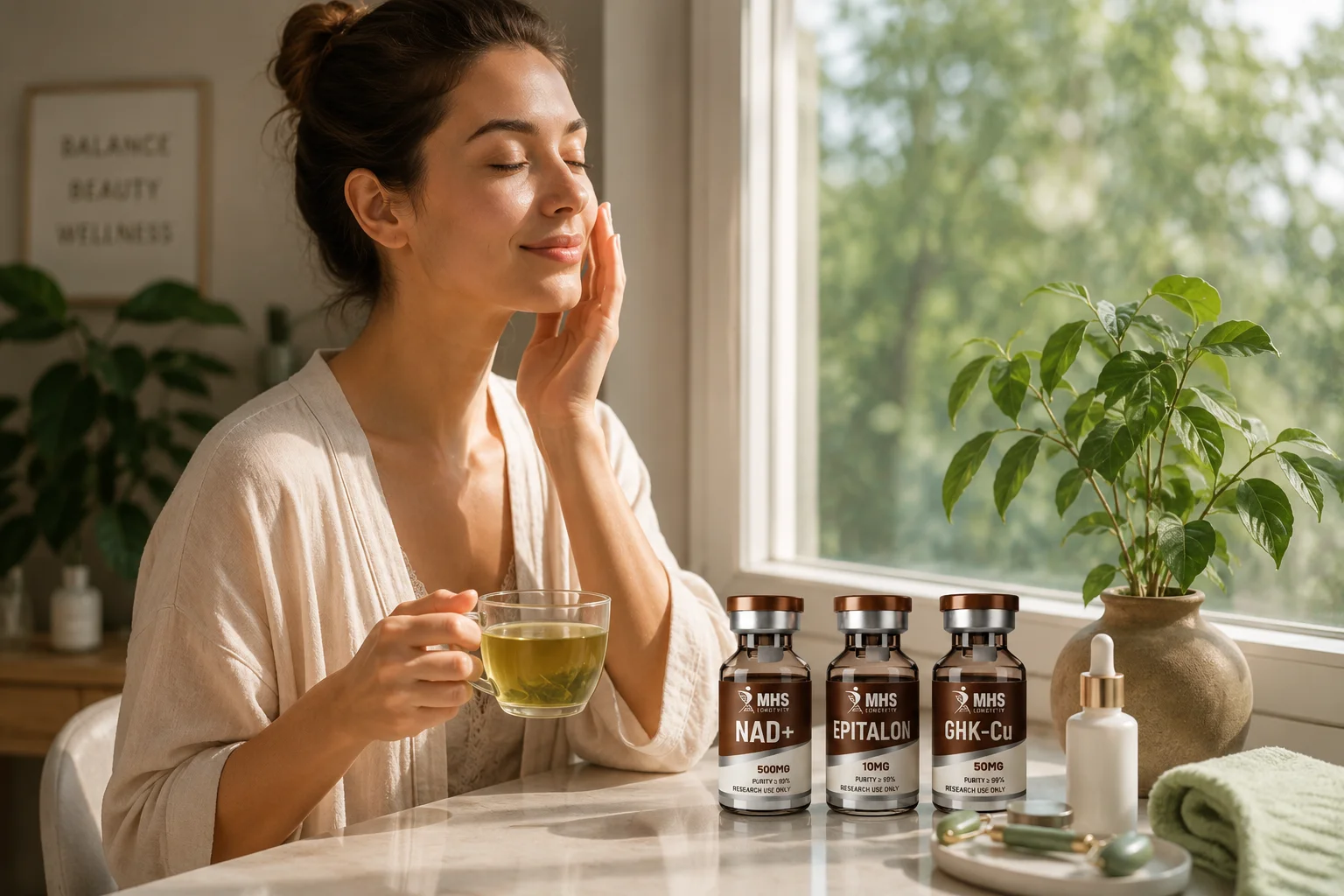
Introduction
Aging isn’t just about wrinkles or appearance—it’s about energy, recovery, performance, and how your body functions over time. That’s why more people are shifting toward a deeper question: how peptides support aging at a cellular level.
At MHS Longevity, we approach anti-aging as long-term optimization—not quick fixes. Modern anti-aging routines have evolved. It’s no longer just skincare or supplements—it’s about optimizing how the body repairs, regenerates, and maintains itself.
Peptides are often discussed as part of this shift, not as rapid transformations, but as tools that may support natural biological processes tied to aging. The key is understanding where they fit. Because anti-aging today isn’t about reversing time—it’s about slowing decline, improving quality of life, and maintaining performance as you age.
TLDR Guide
Here’s how peptides support aging in modern routines:
- May support cellular repair and recovery
- Often associated with improved energy and performance
- Can complement skin, hair, and overall appearance goals
- Work best as part of a long-term optimization strategy
- Require consistency and lifestyle support
For structured approaches, exploring longevity-focused optimization strategies can help align expectations and goals.
Detailed Breakdown
What Does "Supporting Aging" Actually Mean?
Before diving into how peptides support aging, it’s important to define what anti-aging really involves today.
It’s not about stopping aging—it’s about:
- Maintaining energy levels
- Supporting recovery and repair
- Preserving muscle and cognitive function
- Improving overall quality of life
This broader perspective is why modern routines focus on internal processes, not just external appearance.
How Peptides Support Aging at a Cellular Level
Peptides are short chains of amino acids that act as signaling molecules in the body. They are often discussed in relation to:
- Cellular repair mechanisms
- Protein synthesis
- Communication between biological systems
As the body ages, these processes may become less efficient. The idea behind how peptides support aging is tied to helping maintain or optimize these natural functions. Rather than forcing change, they are often associated with supporting what the body already does—just more efficiently.
Key Areas Where Peptides Are Commonly Used in Anti-Aging Routines
1. Energy and Performance
One of the earliest signs of aging is reduced energy. Many people notice:
- Lower stamina
- Increased fatigue
- Slower recovery
Peptides are often discussed as part of strategies aimed at supporting energy systems and overall performance.
2. Muscle Maintenance and Recovery
Muscle mass naturally declines with age, which impacts strength, metabolism, and mobility. Supporting muscle health is a major part of modern anti-aging routines. This is why many explore muscle growth and recovery strategies to maintain performance over time.
3. Skin and Appearance
While anti-aging goes beyond appearance, skin health is still a key focus. Peptides are often associated with:
- Supporting collagen production
- Improving skin elasticity
- Enhancing overall appearance
For those focused on aesthetics, exploring skin and overall optimization strategies can complement broader routines.
4. Cognitive Function and Brain Health
Mental sharpness is another area affected by aging. Some people explore strategies that support:
- Focus and clarity
- Memory retention
- Cognitive performance
This is where brain health optimization approaches come into play.
5. Long-Term Longevity and Cellular Health
At its core, how peptides support aging is closely tied to longevity. This includes:
- Supporting cellular repair processes
- Maintaining metabolic efficiency
- Promoting long-term health
For a broader approach, longevity-focused strategies provide a more complete framework.
Why Modern Anti-Aging Is More Holistic
Peptides are rarely used in isolation. Today’s anti-aging routines focus on multiple factors working together. Key components include:
- Nutrition and metabolic health
- Sleep and recovery
- Stress management
- Physical activity
Peptides are often positioned as one piece of a larger system—not the entire solution.
Common Misconceptions About Anti-Aging
There's a Quick Fix
There isn’t. Sustainable results come from long-term consistency.
Anti-Aging Is Only About Appearance
Modern approaches focus on internal health, not just external changes.
More Is Better
Adding more variables doesn’t guarantee better results. Simplicity and consistency often lead to better outcomes.
How to Build a Modern Anti-Aging Routine
If you’re thinking about how peptides support aging, it helps to look at the bigger picture. A balanced routine may include:
- Strength training to maintain muscle
- Nutrient-dense diet for cellular support
- Quality sleep for recovery
- Stress management for hormonal balance
Peptides are often integrated into this framework rather than used alone.
Setting Realistic Expectations
Understanding how peptides support aging also means managing expectations. Here’s what to keep in mind:
- Results are gradual, not immediate
- Benefits are often subtle at first
- Long-term consistency matters most
Anti-aging is not about rapid change—it’s about sustained improvement over time.
Key Takeaways
- How peptides support aging is tied to cellular repair, recovery, and overall optimization
- Modern anti-aging focuses on energy, performance, and long-term health
- Peptides are often used as part of a broader, holistic routine
- Consistency and lifestyle factors play a major role in outcomes
- Long-term strategies provide better results than short-term approaches
Frequently Asked Questions
Peptides are often discussed as signaling molecules that support natural biological processes. They may play a role in cellular repair and recovery. Their impact is typically gradual and part of a broader strategy.
No, peptides are usually considered a complement to lifestyle factors like diet, exercise, and sleep. Without these foundations, results may be limited. A holistic approach is more effective.
Results typically develop over weeks to months. Early changes may be subtle, with more noticeable improvements over time. Consistency is key to long-term outcomes.
No, modern anti-aging approaches focus on internal health as well. This includes energy, recovery, and cognitive function. Appearance is just one part of the overall picture.
A balanced routine that includes nutrition, exercise, sleep, and stress management is essential. Peptides may be integrated as part of this broader strategy. Long-term consistency leads to better results.