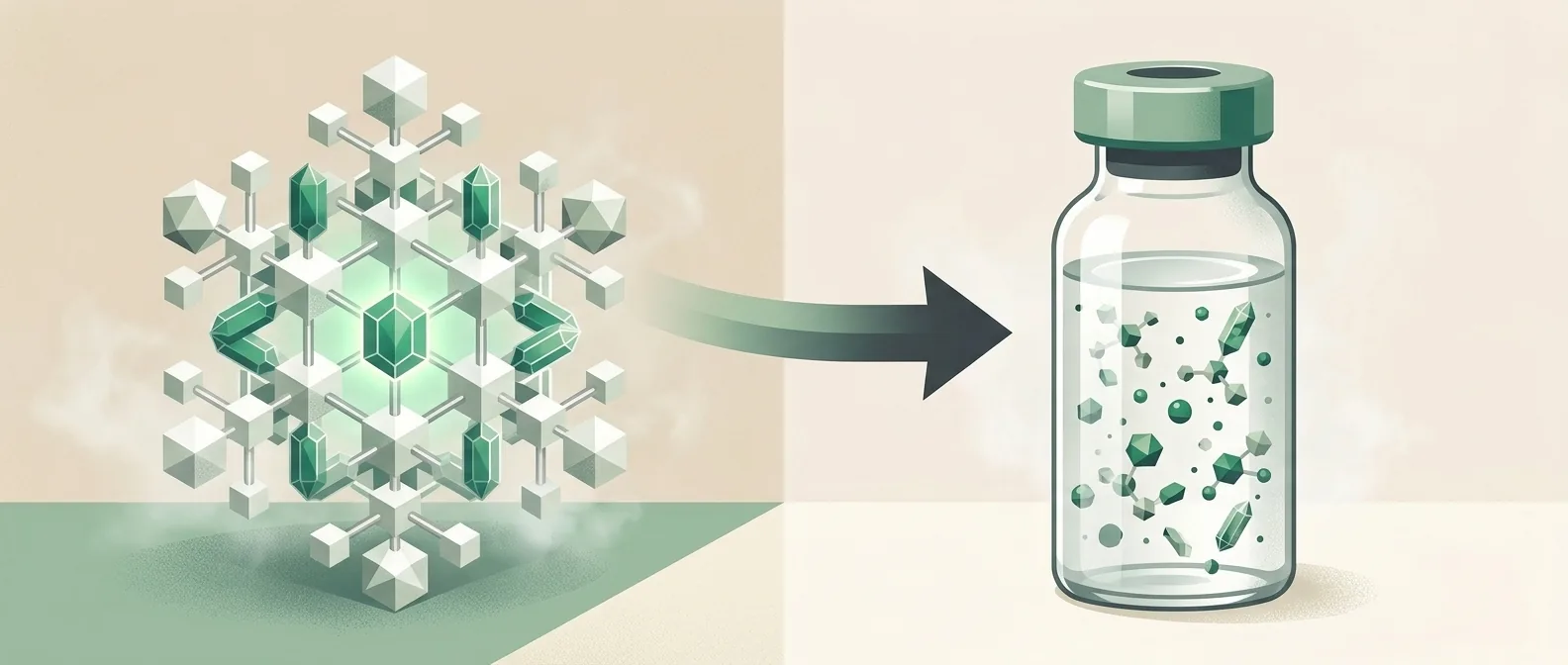
Research peptides are available in two primary physical forms: lyophilized (freeze-dried) powder and pre-reconstituted liquid solution. The distinction is not merely cosmetic — it fundamentally affects stability, shelf life, handling requirements, and experimental flexibility.
This article examines the scientific basis for these differences and provides practical guidance for working with each form.
What Is Lyophilization?
Lyophilization (freeze-drying) is a dehydration process that removes water from a frozen peptide solution under vacuum. The water transitions directly from solid (ice) to gas (vapor) through sublimation, leaving behind a dry, porous cake or powder that retains the peptide's molecular structure.
Stability Comparison
| Property | Lyophilized | Liquid/Reconstituted |
|---|---|---|
| Chemical stability | High — minimal degradation pathways active | Lower — hydrolysis and oxidation proceed |
| Shelf life | 12–24+ months at -20°C | Days to weeks at 2–8°C |
| Temperature tolerance | Moderate — tolerates brief ambient exposure | Low — degrades quickly above 8°C |
| Moisture sensitivity | High — must be sealed dry | N/A — already in solution |
| Freeze-thaw tolerance | Good — powder is inherently stable | Poor — ice crystals can denature peptide |
| Shipping stability | Excellent — standard insulated packaging | Requires cold chain throughout |
Why Lyophilized Is Preferred for Distribution
Most research peptide suppliers distribute compounds in lyophilized form for several practical reasons:
- Longer shelf life reduces waste and allows bulk purchasing
- More tolerant of shipping temperature fluctuations
- Researcher controls the reconstitution solvent and concentration
- Eliminates the need for preservatives that could interfere with experiments
- Reduced risk of microbial contamination (dry environment)
Reconstitution: Converting Powder to Solution
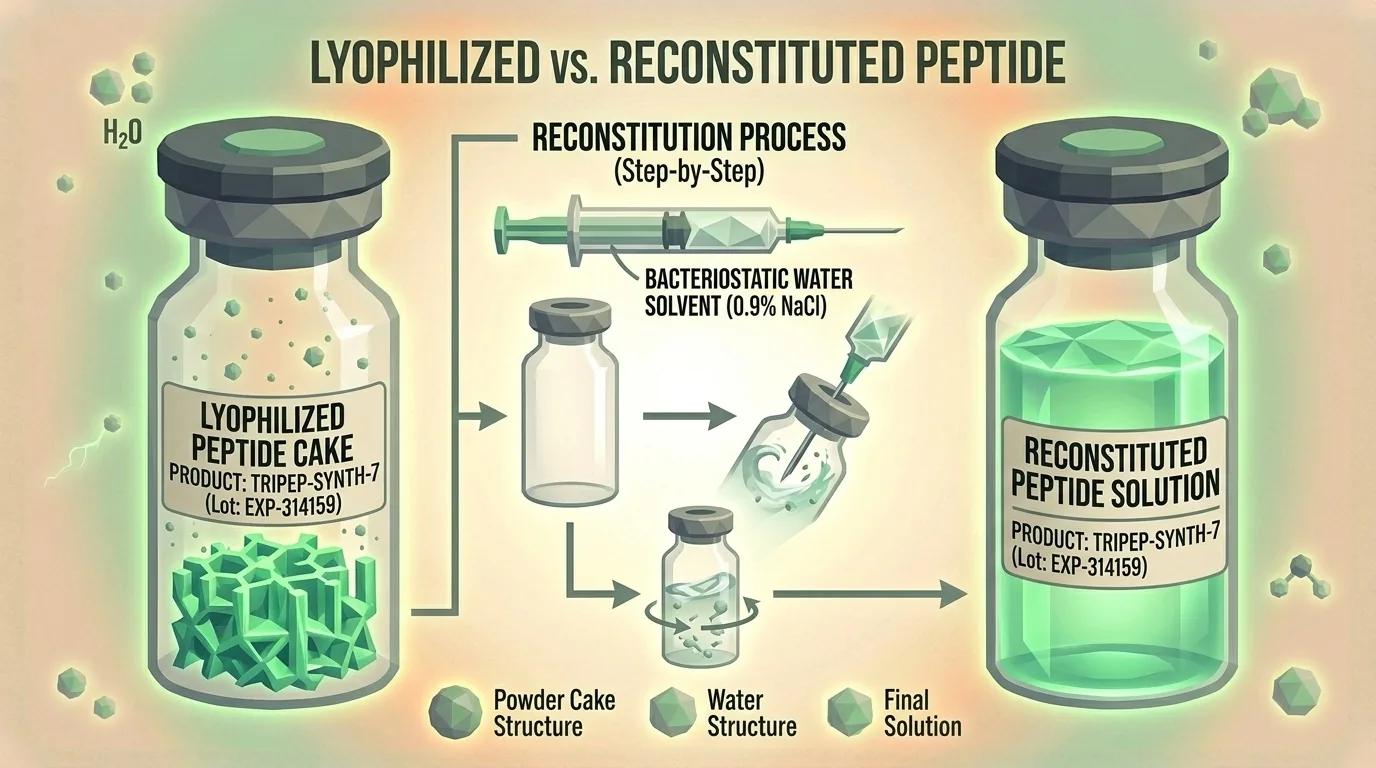
When you're ready to use a lyophilized peptide, reconstitution dissolves it in a suitable solvent. The most common choice is bacteriostatic water (BAC water), which contains 0.9% benzyl alcohol as a preservative. For a detailed molecular overview of solvents, concentration equations, and stability storage, see our peptide reconstitution guide.
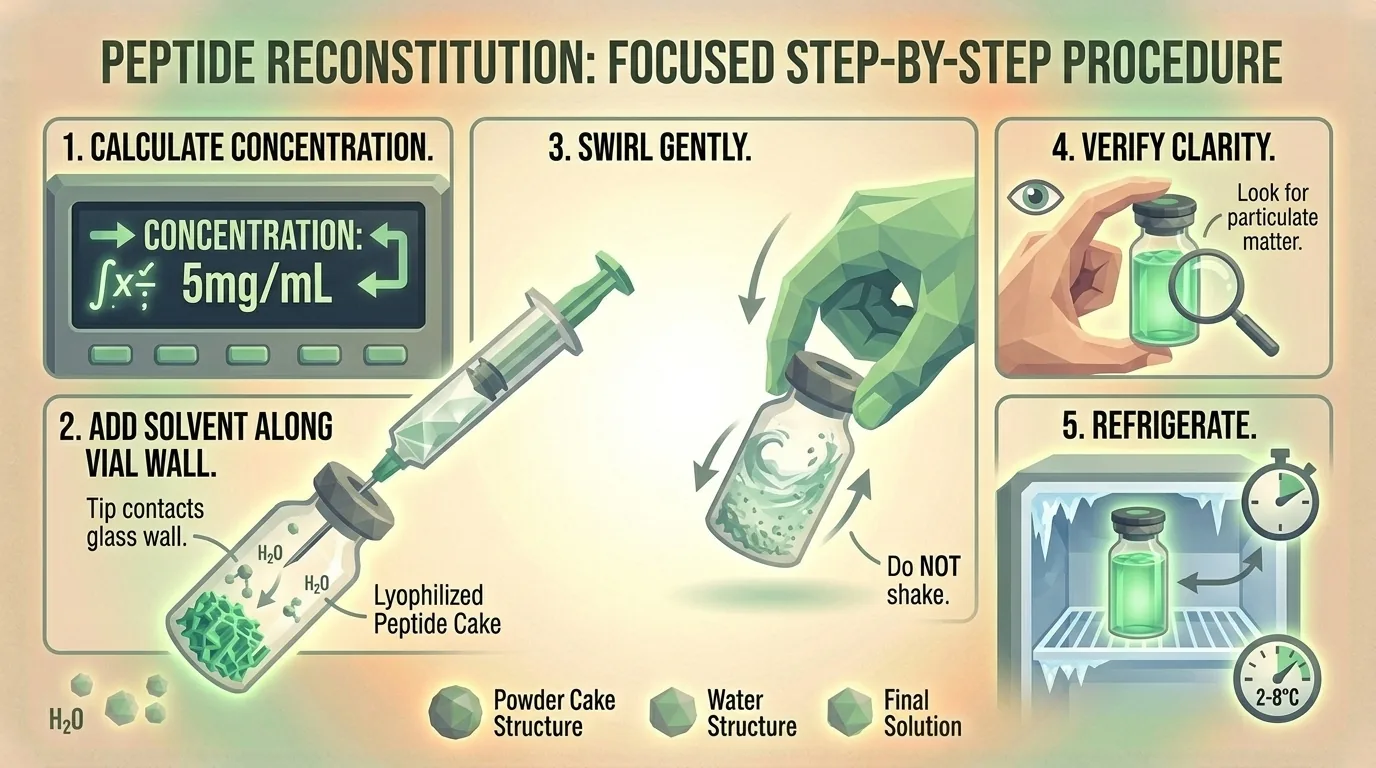
- Calculate the desired concentration — Determine how much solvent to add based on your target concentration (e.g., 5mg peptide + 2mL BAC water = 2.5mg/mL)
- Add solvent along the vial wall — Direct the stream gently against the glass, not onto the powder
- Swirl gently — Roll the vial between your palms; never shake vigorously
- Verify dissolution — The solution should be clear with no visible particles
- Store immediately — Refrigerate at 2–8°C and note the reconstitution date
When Liquid Form Makes Sense
Pre-reconstituted liquid peptides have a narrower but valid use case: when the researcher needs immediate use without preparation time, or when the supplier offers a standardized concentration that matches the intended application. However, the trade-off is always reduced shelf life and stricter cold-chain requirements.
Key Takeaways
- Lyophilized peptides offer superior stability, longer shelf life, and greater flexibility
- Reconstituted peptides degrade faster due to active hydrolysis and oxidation in solution
- Most suppliers distribute in lyophilized form — the researcher controls reconstitution
- Proper reconstitution technique (gentle, no heat, correct solvent) preserves compound integrity
- Once reconstituted, use within the documented stability window and refrigerate at 2–8°C
Lyophilized Research Peptides
All MHS Longevity compounds ship in lyophilized form for maximum stability and shelf life.
Shop Peptides