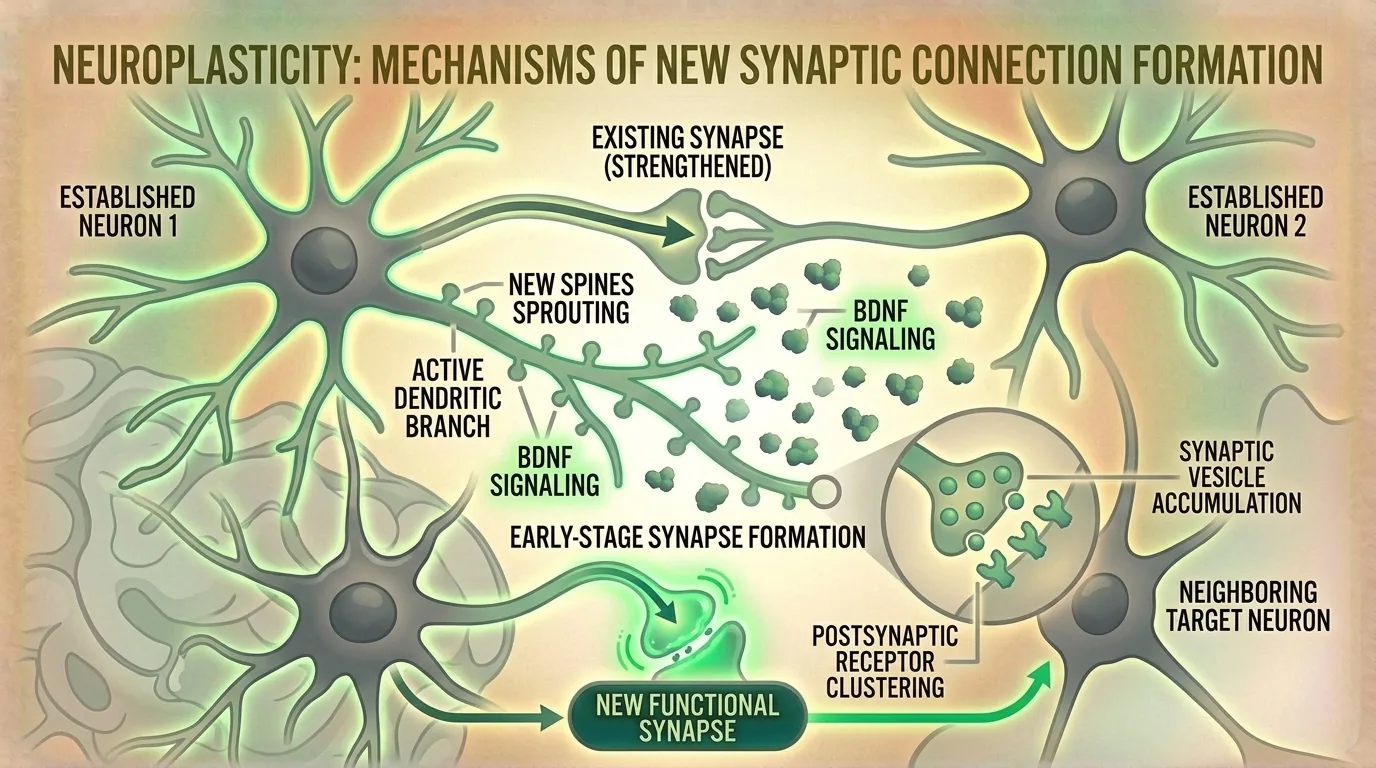
Neuroplasticity refers to the brain's capacity to form new neural connections, strengthen existing ones, and reorganize circuitry in response to learning, experience, or injury. This process is governed by neurotrophic growth factors — proteins that promote neuron survival, growth, and synaptic plasticity.
Several peptide compounds are being studied for their interactions with neuroplasticity pathways. This article reviews the key growth factors, their roles in brain function, and the research compounds targeting these systems.
Key Neurotrophic Growth Factors
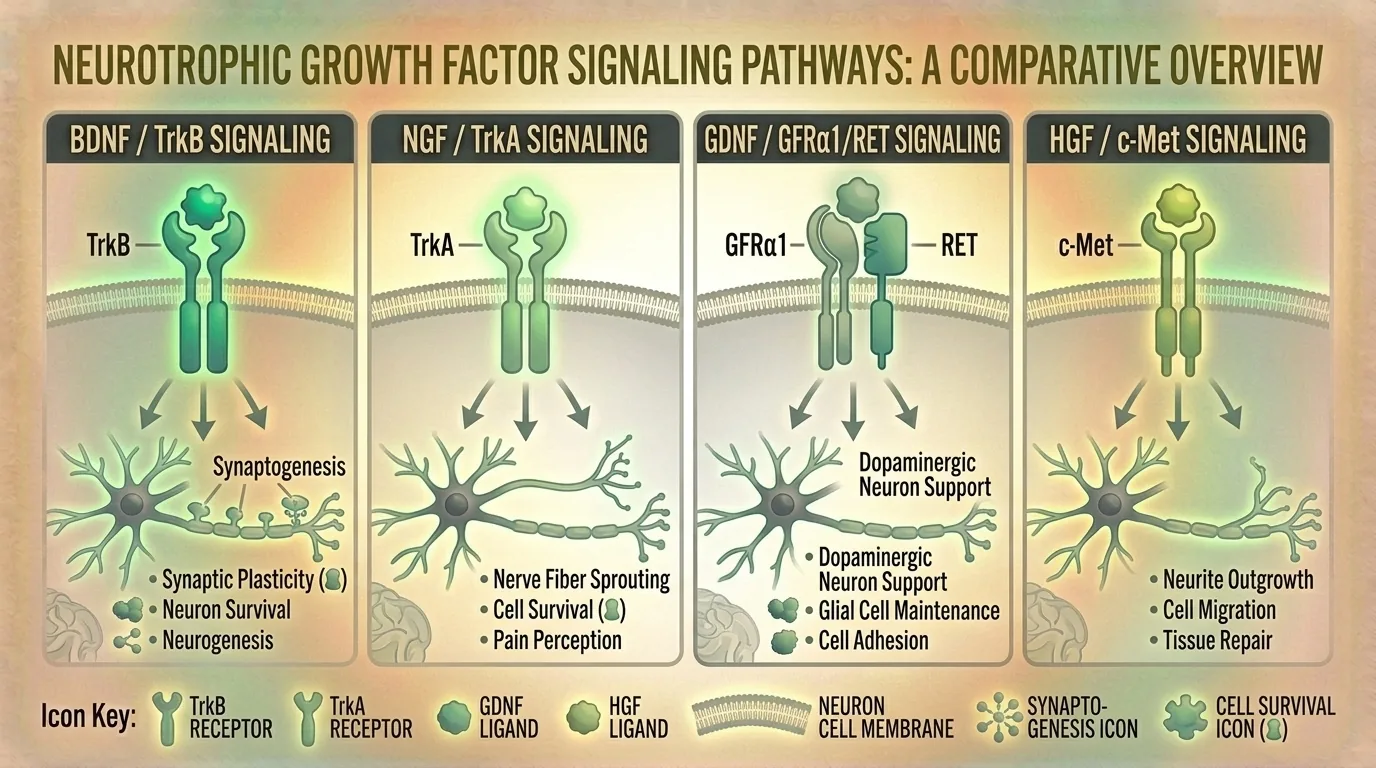
| Growth Factor | Primary Role | Relevance |
|---|---|---|
| BDNF | Supports neuron survival, synaptic plasticity, memory consolidation | Most studied growth factor in cognitive research |
| NGF | Promotes cholinergic neuron survival and differentiation | Studied in neurodegenerative disease contexts |
| GDNF | Supports dopaminergic neuron survival | Studied in Parkinson's disease research |
| HGF/c-Met | Synaptogenesis, neuronal repair | Targeted by research peptide Dihexa |
BDNF: The Master Neuroplasticity Factor
Brain-Derived Neurotrophic Factor (BDNF) is the most extensively studied neurotrophic factor in cognitive research. It binds to the TrkB receptor and activates intracellular signaling cascades (PI3K/Akt, MAPK/ERK, PLCγ) that promote synaptic strengthening, long-term potentiation (LTP), and neuronal survival.
Peptides Studied in Growth Factor Pathways
Several peptide compounds interact with neuroplasticity pathways, either directly or through modulation of growth factor expression:
- Semax — Studied for upregulation of BDNF and NGF expression in brain tissue
- Selank — Research suggests effects on BDNF expression and GABAergic modulation
- Dihexa — Studied for direct interaction with HGF/c-Met synaptogenic pathway
- GHK-Cu — Copper peptide studied for gene expression regulation including neurotrophic genes
- Cerebrolysin — Porcine brain-derived peptide mixture studied for neurotrophic-like activity
Key Takeaways
- Neuroplasticity depends on neurotrophic growth factors, with BDNF being the most studied
- BDNF supports synaptic strengthening, memory consolidation, and neuronal survival via TrkB signaling
- Multiple peptides are being studied for growth factor modulation — Semax, Selank, Dihexa, GHK-Cu
- Most evidence comes from preclinical models with limited human cognitive outcome data
- Growth factor research is a rapidly evolving field with significant therapeutic potential
Neuropeptide Research Compounds
Explore independently verified compounds for neuroplasticity and cognitive research.
Shop Peptides