
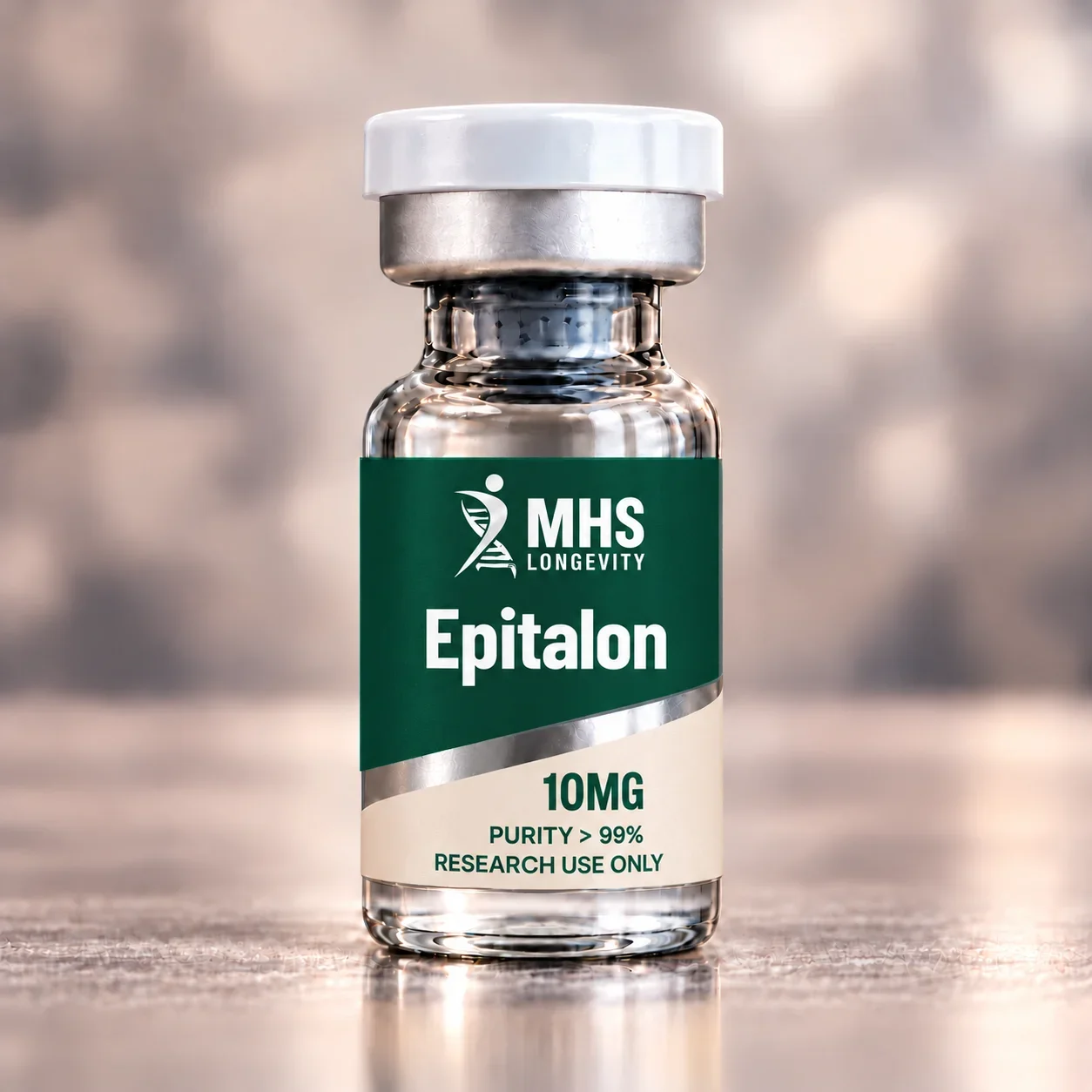
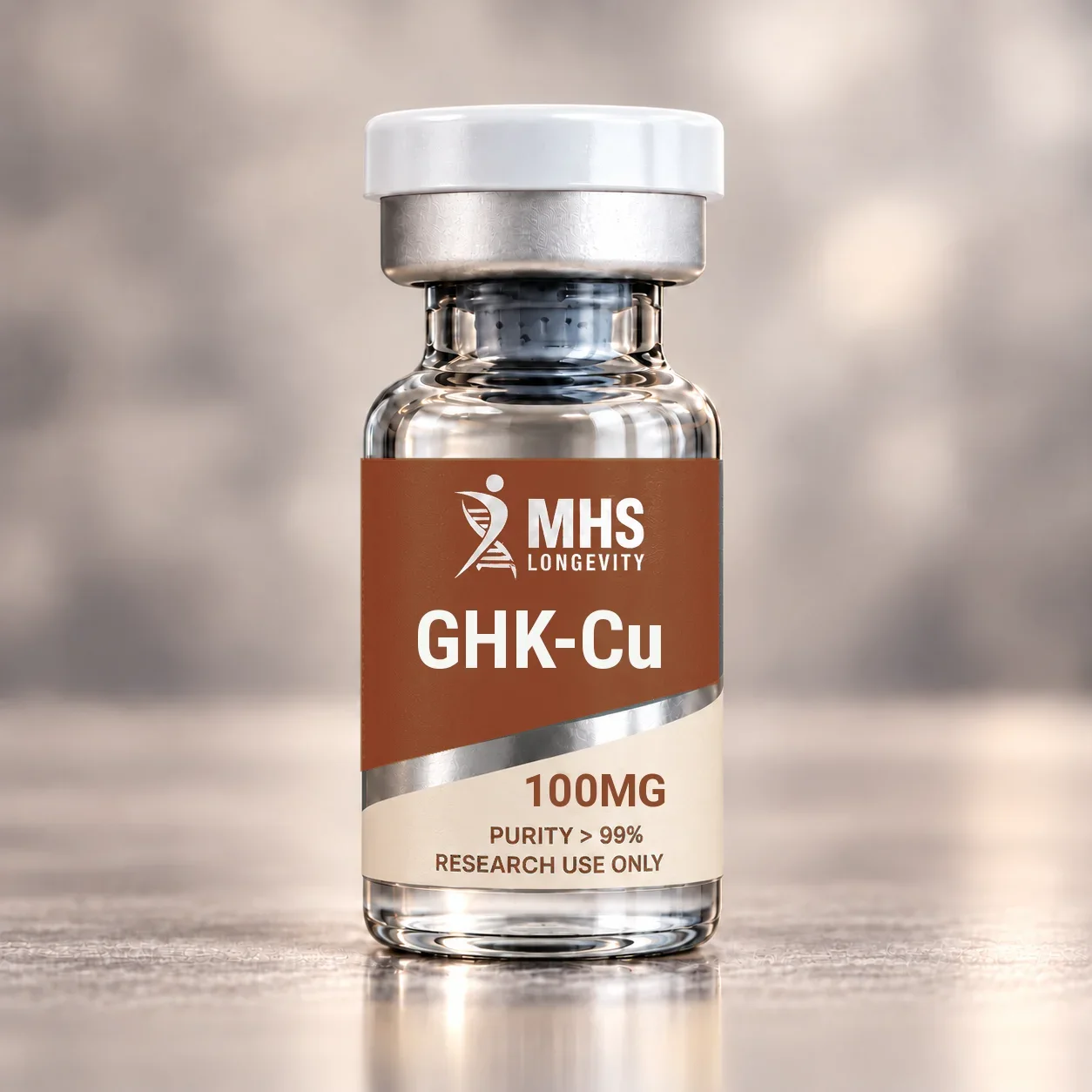
GHK-Cu 100mg
- 99%+ purity verified by independent HPLC + Mass Spec
- Certificate of Analysis published — match it to your vial
- Ships from US facility · Free shipping over $150
$109.99
In stock — ships within 24h
For laboratory research use only. Not for human consumption.
Batch verification✓ Verified
- Purity (HPLC)
- >99.2%
- Method
- HPLC + MS
Storage & handling+
Lyophilized GHK-Cu at -20°C is stable across reasonable timeframes regardless of vial size. The handling difference for the 100mg vial is volume-related: a single reconstitution produces double the working solution of a 50mg vial, which makes single-use aliquoting more practical. Protect from prolonged light exposure — the copper coordination is more photosensitive than the peptide alone, and the larger powder volume in a 100mg vial spends more time exposed during weighing/dispensing operations if not handled carefully. Standard aseptic technique applies. For laboratory research use only.
Shipping & delivery+
Orders placed before 2pm ET ship the same business day from our US facility. Standard (2–4 days) or expedited options available. Free standard US shipping on orders over $150. Plain, unbranded packaging. Full shipping policy
Returns & damage policy+
Damaged or non-conforming orders are reshipped at no cost — contact support with a photo within 7 days of delivery. See our full returns policy for details. Full returns policy
We accept


HPLC tested
99%+ purity verified
Public COAs
Third-party certificates
Veteran-owned
US-based fulfillment
Free shipping
On orders over $150
Overview
GHK-Cu (Copper Tripeptide-1) is a naturally occurring copper complex of the tripeptide glycyl-L-histidyl-L-lysine, known for its regenerative and anti-inflammatory properties. This 50mg vial from MHS Longevity, with 99% purity, is intended solely for research purposes. Studies suggest GHK-Cu may promote wound healing, stimulate collagen production, and exhibit antioxidant effects, with potential applications in skin repair, anti-aging, and tissue regeneration research. Not approved for human or veterinary use by regulatory agencies like the FDA, and its use is restricted to laboratory settings. Store in a cool, dry place and handle with aseptic techniques.
Frequently asked questions
Yes. Every batch of GHK-Cu 100mg undergoes independent third-party testing using High-Performance Liquid Chromatography (HPLC) and Mass Spectrometry (MS). The Certificate of Analysis is published and accessible from the product page.
GHK-Cu 100mg sold by MHS Longevity is verified to 99%+ purity, with the result documented in each batch's Certificate of Analysis. Anything below that threshold is rejected before release.
The Certificate of Analysis for GHK-Cu 100mg is available directly from the product page and on our Third-Party Test Results page. Each COA includes the batch identifier, test date, testing method, and verified purity percentage.
GHK-Cu 100mg ships from our US-based facility with standard or expedited options. Orders over $150 qualify for free standard US shipping. All orders are packaged discreetly with documented handling protocols.
No. GHK-Cu 100mg is supplied strictly for laboratory research purposes only. It is not approved by the FDA for human or veterinary use, and it is not intended to diagnose, treat, cure, or prevent any disease.
MHS Longevity is a veteran-owned operation focused on pharmaceutical-grade research compounds. We source from vetted manufacturers, batch-test independently with HPLC and Mass Spectrometry, and publish every Certificate of Analysis. Pricing is transparent and the testing process is documented end-to-end.
No. Both vial sizes contain the same GHK-Cu tripeptide-copper complex drawn from the same supply chain and tested under the same HPLC + MS + copper-form verification protocol. The only difference is the amount per vial.
When research-protocol throughput exceeds 50mg before the reconstituted solution's stability window closes — topical-formulation work at meaningful pilot scale, multi-cohort animal studies, or extended-timepoint protocols. For low-throughput cell-culture or single-arm pilot work, the 50mg vial is usually adequate.
Yes — the characteristic blue color comes from the copper(II) coordination and is consistent across both vial sizes when the supplied material meets specification. Significant fading or unevenness across the powder volume of a 100mg vial is worth checking against the Certificate of Analysis on receipt, since it can signal uneven copper loading.
Aliquoting becomes more important at the 100mg scale because more total working solution is produced per reconstitution. Single-use aliquots at -20°C, drawn from the freshly reconstituted bulk, minimize freeze–thaw cycling for any given portion of the batch and preserve copper coordination over a study timeline.
You may also like
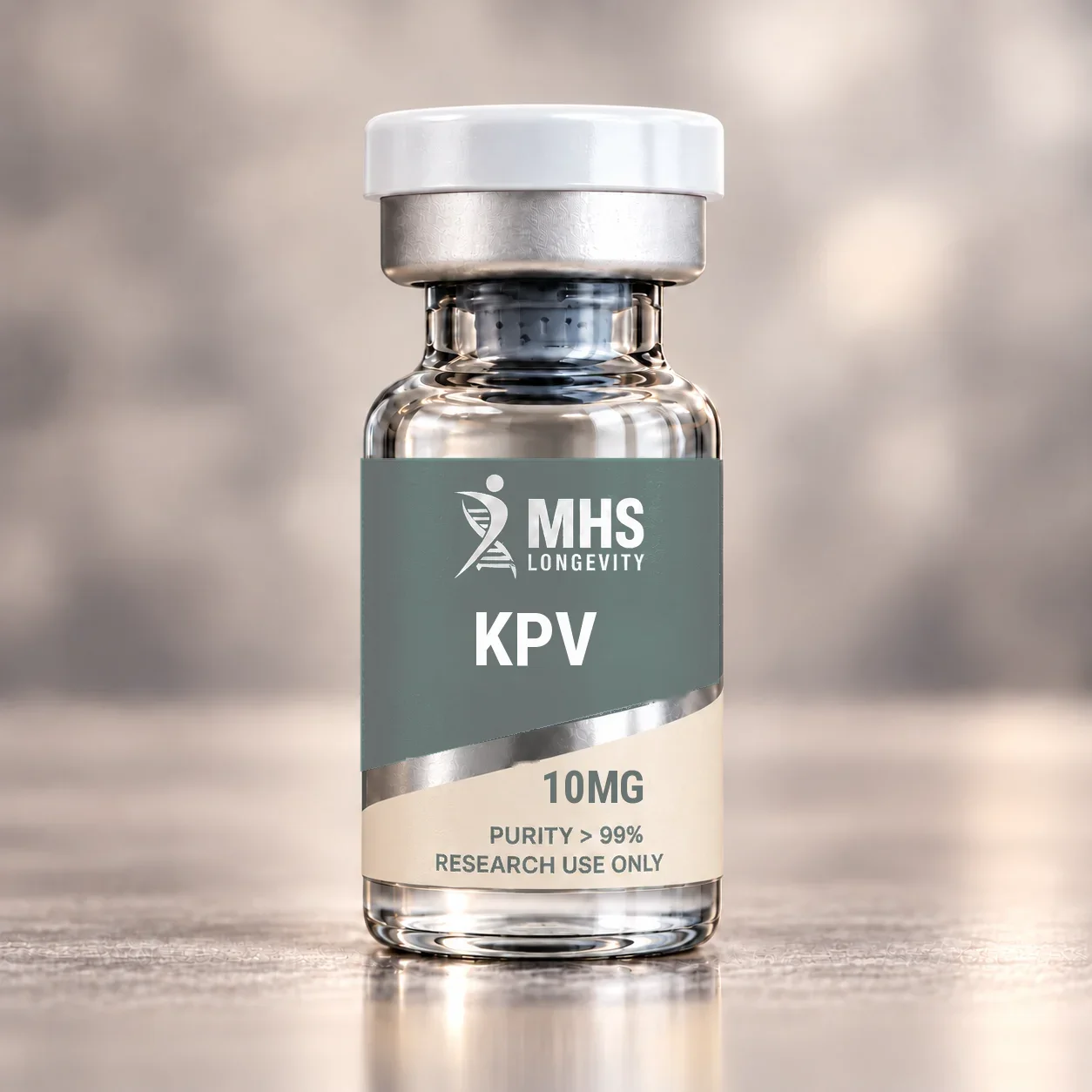
Research & buying
The evidence behind GHK-Cu 100mg and the questions to ask any vendor before you order.
Research details — GHK-Cu 100mg
This guide covers the 100mg vial format of GHK-Cu — the same tripeptide-copper complex described in the dedicated 50mg guide (Gly-His-Lys coordinated with a single copper(II) ion, effective complex weight near 403.9 g/mol), supplied at double the per-vial content. The molecule, the copper-coordination chemistry, and the proposed research mechanisms are identical to the 50mg form. What this guide adds is the practical context for protocols that consume more than 50mg before the stability window of a reconstituted solution closes — and the consistency considerations that come with preparing a larger working volume from a single batch.
When the 100mg vial format suits the research design
GHK-Cu research with consumable-heavy designs falls into a few common categories: topical-formulation pilot work where a single base formulation must be prepared at sufficient volume to cover a controlled-condition arm; multi-cohort dermal-research animal studies; and extended-timepoint regenerative-tissue protocols. In each case, the per-experiment peptide consumption can outpace the 50mg vial's per-reconstitution working volume. Choosing the 100mg vial reduces the number of reconstitution events across the protocol — which in turn reduces the cumulative copper-coordination variability that can arise from repeated freeze-thaw cycles.
GHK-Cu 100mg is sold strictly for laboratory and research use. It is not approved by the FDA or any other regulatory body for human or veterinary use, and nothing in this guide constitutes guidance for human administration.
Why the copper-coordinated form needs extra care at larger scale
The blue color of GHK-Cu powder comes from the copper(II) coordination — a useful built-in visual check on supplied material. At larger vial scale, the consistency of that coloration becomes a meaningful inter-batch quality signal: significant fading, mottling, or color variation across the larger powder volume can indicate uneven copper loading and is worth checking on receipt. The Certificate of Analysis is the authoritative document, but the visual check is a fast first-pass screen.
How the 100mg vial is independently verified
Every batch of MHS Longevity GHK-Cu 100mg is submitted to an independent third-party laboratory before release — the same HPLC + Mass Spectrometry + copper-form verification protocol applied to the 50mg vial:
- HPLC separates the peptide species and measures GHK content as a percentage of total peak area. 99%+ required.
- Mass Spectrometry confirms the peptide molecular mass matches Gly-His-Lys.
- Copper-coordination verification confirms the supplied material is in the copper-loaded form expected for research use, distinguishing GHK-Cu from uncomplexed GHK.
What the 100mg vial Certificate of Analysis shows
- Compound and vial size. GHK-Cu, 100mg nominal content.
- Batch identifier. Unique ID linking certificate to vial.
- Test date. When the analysis was performed.
- Method. HPLC + MS + copper-form verification.
- Verified peptide purity %. 99%+ required for release.
- Copper form confirmation. Verifies the copper-coordinated state.
- Lab and signatures. The independent lab performing the analysis.
Storage and handling for the larger vial
Lyophilized GHK-Cu at -20°C is stable across reasonable timeframes regardless of vial size. The handling difference for the 100mg vial is volume-related: a single reconstitution produces double the working solution of a 50mg vial, which makes single-use aliquoting more practical. Protect from prolonged light exposure — the copper coordination is more photosensitive than the peptide alone, and the larger powder volume in a 100mg vial spends more time exposed during weighing/dispensing operations if not handled carefully. Standard aseptic technique applies.
Where to buy GHK-Cu 100mg
The same eight questions apply whether you're buying GHK-Cu 100mg from us or anywhere else. Vendors who can't answer any of them are worth a closer look.
Vendor evaluation checklist
1. Is the Certificate of Analysis public and downloadable?
A vendor unwilling to publish HPLC/MS results for the batch you're buying has nothing to verify their purity claim against.
2. Which testing method was used — HPLC, Mass Spectrometry, or both?
HPLC measures purity. Mass Spectrometry confirms the molecule's identity. Reputable batches go through both.
3. What's the verified purity percentage on the published COA?
Industry research standard is 99%+. Below that, you're paying for a compound diluted with synthesis byproducts.
4. Where does the product ship from?
US-based fulfillment generally means shorter handling times, customs-free delivery, and clearer return remedies.
5. Is the price published at a single list rate, or hidden behind tier locks?
Opaque pricing is a yellow flag. Transparent vendors quote the same number to every customer.
6. What's the free-shipping threshold, if any?
Compare the all-in cost (product + shipping + handling) — not just the headline price.
7. How is the product stored prior to shipment?
Lyophilized peptides degrade with temperature swings. Vendors should disclose temperature-controlled storage.
8. Is there a documented damage-claim and return policy?
Discreet shipping carries handling risk. A clear, written policy protects you when something goes wrong.
MHS LongevityThis site - Price
- $109.99
- Purity
- 99%+
- Testing
- HPLC + MS
- COA public
- US-based
- Free shipping
- $150+
- Last checked
- Oct 10, 2026
| Vendor | Price | Listed purity | Testing method | COA public | US-based | Free shipping | Last checked |
|---|---|---|---|---|---|---|---|
MHS LongevityThis site | $109.99 | 99%+ | HPLC + MS | $150+ | Oct 10, 2026 |
Competitor data sourced from each vendor's public product page on the date shown. Listed purity reflects each vendor's own published claim; Certificate of Analysis availability is verified at the URL above. Data may have changed since last check.