
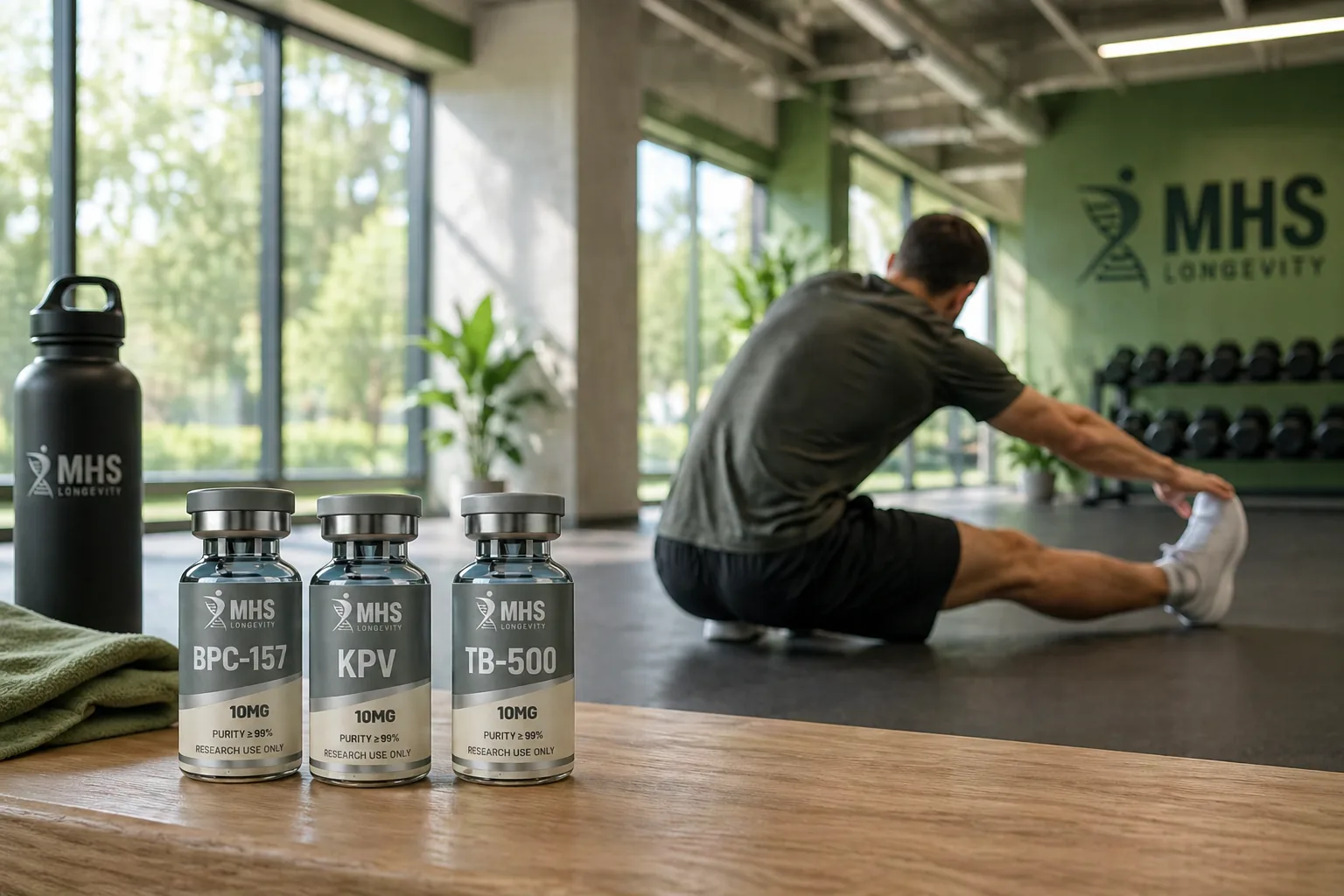
Introduction
The comparison of BPC 157 vs KPV comes down to mechanism and application. While both are associated with gut and recovery research, they target different biological processes.
BPC-157 is typically studied for its role in tissue repair and angiogenesis, while KPV is more commonly explored for its anti-inflammatory signaling effects.
Instead of asking which one is “better,” a more accurate question is: which is more relevant to the pathway you’re studying?
TLDR Quick Guide
Here’s a quick breakdown of BPC 157 vs KPV:
- BPC-157 → studied for tissue repair and recovery
- KPV → studied for inflammation modulation
- BPC-157 → broader systemic applications
- KPV → more targeted immune and gut signaling
- Both → commonly explored in gut-related research
They serve different purposes within similar research areas.
What Is BPC-157?
Mechanism of Action
BPC-157 is a synthetic peptide derived from a protective protein found in gastric juice. In research settings, it is commonly associated with:
- tissue regeneration pathways
- angiogenesis (formation of new blood vessels)
- cellular repair signaling
These mechanisms make it a focus in studies related to recovery and healing.
Research Focus Areas
BPC-157 is often explored in contexts such as:
- soft tissue recovery
- gut lining integrity
- vascular repair
It is frequently grouped within broader recovery and repair categories, similar to compounds found in muscle growth research collections .
What Is KPV?
Mechanism of Action
KPV is a peptide fragment derived from alpha-MSH (melanocyte-stimulating hormone). Its primary focus in research is its role in:
- inflammatory cytokine modulation
- immune response signaling
- gut inflammation pathways
This gives it a more targeted role compared to BPC-157.
Research Focus Areas
KPV is commonly studied in relation to:
- inflammatory response regulation
- gut-related immune signaling
- skin and tissue inflammation
It is often associated with compounds in inflammation and gut health research collections .
BPC-157 vs KPV: Key Differences
Repair vs Inflammation
The biggest distinction in BPC 157 vs KPV lies in their primary research roles:
- BPC-157 focuses on structural repair and regeneration
- KPV focuses on reducing inflammatory signaling
These roles can overlap but are fundamentally different in approach.
Systemic vs Targeted Effects
BPC-157 is often considered more systemic, with broader applications across multiple tissues.
KPV, on the other hand, is more targeted toward inflammation pathways, particularly in the gut and immune system.
Which Is Better for Gut Research?
BPC-157 for Gut Integrity
BPC-157 is commonly explored for its potential role in maintaining and repairing the gut lining. Its association with tissue regeneration makes it relevant in studies involving structural integrity.
This makes it useful in research focused on physical recovery of gut tissues.
KPV for Inflammatory Response
KPV is more focused on calming inflammatory signals within the gut. It is often studied in models involving immune response and cytokine activity.
This makes it more suitable for research centered on inflammation rather than structural repair.
Can BPC-157 and KPV Be Compared Directly?
Different Roles, Complementary Research
Comparing BPC 157 vs KPV directly can be misleading because they are not designed for the same primary function.
Instead, they are often viewed as complementary in research contexts—one addressing repair, the other addressing inflammation.
Context Determines Relevance
The choice between them depends entirely on the research objective. If the focus is tissue regeneration, BPC-157 is more relevant. If the focus is inflammatory signaling, KPV becomes the priority.
The Importance of Quality in Peptide Research
Purity and Consistency
When working with research peptides, quality is critical. Variations in purity or structure can significantly affect outcomes.
MHS Longevity emphasizes pharmaceutical-grade standards and third-party testing to ensure consistency across batches.
Structured Research Categories
Organizing compounds by biological focus helps streamline research. Categories like longevity research collections provide a framework for exploring peptides based on goals rather than individual compounds alone.
Key Takeaways
- BPC 157 vs KPV is a comparison of repair vs inflammation pathways
- BPC-157 is studied for tissue regeneration and recovery
- KPV is studied for anti-inflammatory signaling and immune response
- They serve different but potentially complementary roles
- Research goals should determine which compound is more relevant
Frequently Asked Questions
BPC-157 is primarily studied for tissue repair and regeneration. KPV is more focused on inflammation modulation and immune signaling. Their mechanisms target different biological pathways.
It depends on the research focus. BPC-157 is often explored for structural repair of the gut lining. KPV is more commonly studied for reducing inflammation in the gut.
In some research contexts, they are considered complementary due to their different mechanisms. One targets repair while the other targets inflammation. However, their use depends on specific study design and objectives.
No, these compounds are typically sold for research purposes only. They are not approved for human consumption. Any application should remain within a research context.
Purity and consistency directly impact research outcomes. Low-quality peptides can lead to unreliable data. That’s why third-party testing and strict standards are essential.